Darwinism's Challenge to Victorian Morality
The Victorian era was marked by a strict moral code shaped by a rising middle class and traditional family values. Darwin's theories of evolution introduced a naturalistic view of morality, suggesting that ethical behavior evolved as a survival mechanism rather than being divinely ordained. This shift questioned the very foundations of Victorian morality, challenging societal norms and beliefs about human nature and ethics. The implications of Darwin's work continue to resonate in contemporary discussions about morality and ethics.
- ReadSociety and culture of the Victorian era · Wikipedia
Traces the societal and cultural dynamics of the Victorian era, emphasizing the growing middle class's influence on moral values. The period saw a distinct emphasis on family values and a moral code shaped by evangelical movements.
- ReadEvolutionary Ethics | Internet Encyclopedia of Philosophy · Internet Encyclopedia of Philosophy
Argues that evolutionary ethics proposes morality as a product of natural selection rather than divine revelation. Edward O. Wilson's work suggests that morality could be biologically based, offering a selective advantage to social beings.
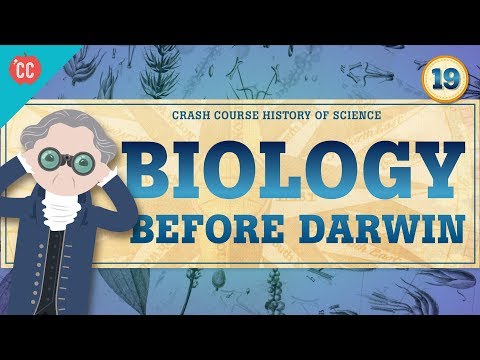
- WatchBiology Before Darwin: Crash Course History of Science #19 · YouTube
Shows the historical context leading to Darwin's theories by exploring earlier scientific inquiries into the nature of life. This background is essential for understanding the revolutionary ideas that Darwin would later present.
- BookThe Origin of Species · Bookshop.org
Describes how Darwin's theory of natural selection challenges established beliefs by asserting that species evolve through a struggle for existence. His work emphasizes ecological interdependence and the implications for human morality.

The selected pieces collectively illustrate the societal context of the Victorian era, the philosophical implications of Darwin's theories, and the historical evolution of biological thought. Starting with an overview of Victorian society sets the stage for understanding the moral framework that Darwin challenged. The subsequent pieces delve into the intersection of ethics and evolution, culminating in Darwin's seminal work, which fundamentally altered perceptions of morality. This progression highlights the transformative impact of Darwinism on Victorian morality and beyond.
Book links are Bookshop.org affiliate links. Curiate may earn a commission on purchases, at no extra cost to you — Bookshop.org also gives a share to independent bookshops.
Reading paths, built to arrive somewhere
Curiate turns what you are curious about into a short path — an entry point, something to watch, and the key book on the topic. Free to browse.