The New York City graffiti movement and the subway city
The New York City graffiti movement in the 1980s grew from graffiti that emerged primarily throughout the city's subway system and working-class neighborhoods during the late 1960s and 1970s. How did the subway city shape graffiti and its changing place in public life? By the end, readers will understand how transit, enforcement, artistic choices, and public policy shaped the movement and its spaces.
2 articles, 1 book
The reading path
- Readthe new york city graffiti movement in the 1980s · Wikipedia
Writers moved to subway trains for greater exposure, and the 149th St. Grand Concourse station in The Bronx became the most legendary of several meeting points for practice, socialization, and exchanging ideas and styles. New York City's accessible, interconnected subway system enabled the movement, whose participants often operated through coordinated efforts. In 1984, the New York City Transit Authority began a five-year program to eradicate graffiti. By the 1980s, increased police surveillance, security measures and cleanup efforts had weakened New York's graffiti subculture, and harder-to-paint subways led more writers into the streets; the years between 1985 and 1989 became known as the "diehard" era, and the last graffitied train was removed from service in 1989. John Matos (also known as Crash) creates Pop Art-inspired murals, including work featuring sailor Popeye on the wall at Bowery and East Houston Street. The source says writers started using large-scale murals to gain more fame.
- BookSubway Art · Bookshop.org
Some city officials treated subway graffiti as a sign that the city was losing control: the "broken windows" theory casts small-scale disorder as a pathway to more serious crime. Yet officials' anti-graffiti efforts could disproportionately police poor youth, and laws were often selectively enforced in favor of murals over tagging. Some cities created legal graffiti spaces, such as abandoned warehouses and alleyways, hoping to limit illegal work.
- ReadGraffiti Writers – Subcultures and Sociology · haenfler.sites.grinnell.edu
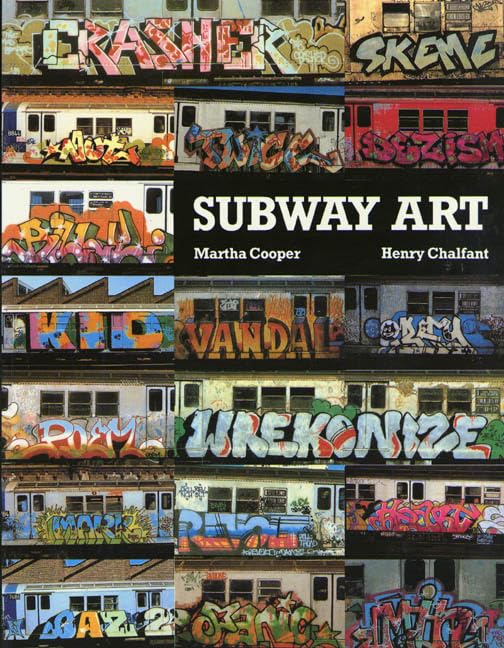
Subway Art by Martha Cooper describes how two New York City photographers separately documented subway-car artwork for a decade, through the 1970s and into the 1980s, and quickly shared prints with graffiti artists who lacked cameras to record their marks.

Book links are Bookshop.org affiliate links. Curiate may earn a commission on purchases, at no extra cost to you — Bookshop.org also gives a share to independent bookshops.
Reading paths, built to arrive somewhere
Curiate turns what you are curious about into a short path — a quick lesson on an article, something to watch, and a book to go deep on. Free to browse.