Curiate Blog
Ever struggle to finish reading an article? Why it happens and what helps
When there is always something else to read, one article starts to feel optional
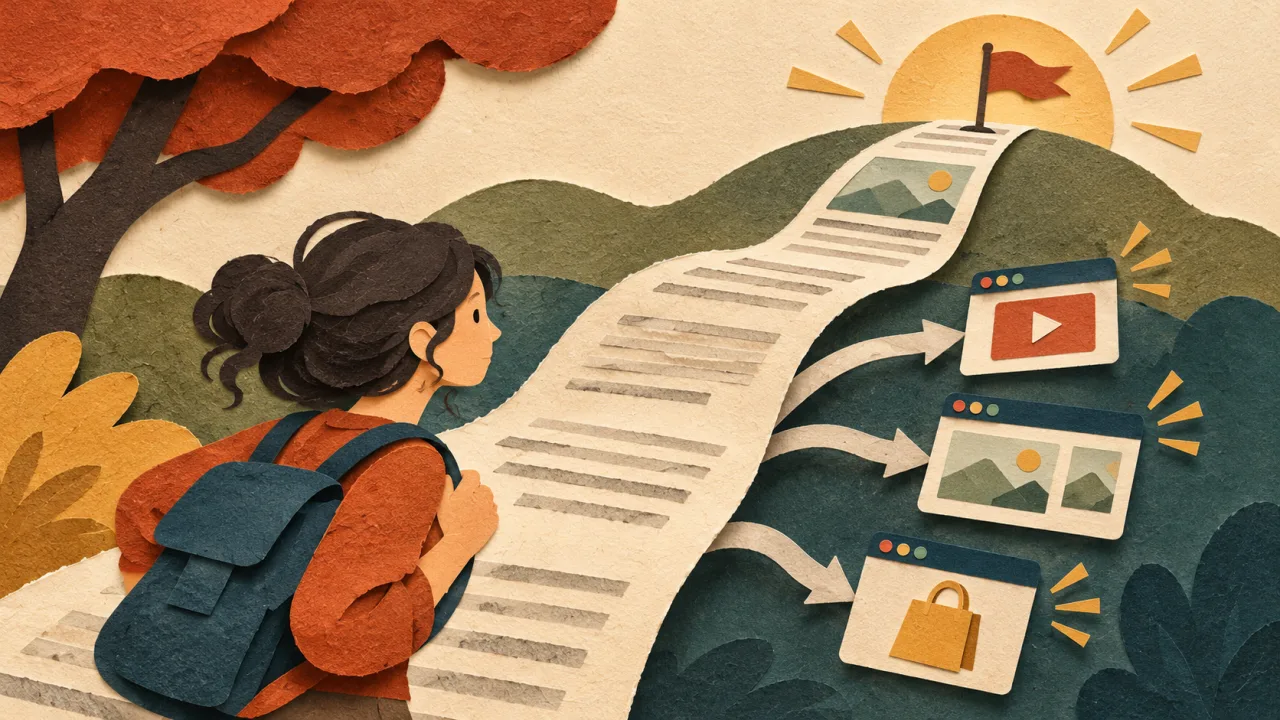
You open an article. Two paragraphs in, you remember the other one you meant to read. You open that in a new tab, then see a third thing in the sidebar. Twenty minutes later you have five tabs open and have finished none of them.
I know this feeling well. I often don't feel like I can read a whole article, not because it is hard, but because there are so many other things to choose from. Every piece is one tap away from a more promising one. That is the problem I built Focus Time around.
It can look like the attention trouble people associate with ADHD. For some people it may be, and I am not a clinician, so I won't tell you what yours is. What I can do is describe what the research says about choosing, switching and finishing, and what has helped me.
Why one article starts to feel optional
On a feed, nothing is final. The article you are reading is only the current best option, and the next one is always a tap away. That makes stopping cheap, which is nice when the piece is bad and costly when it is good.
I don't think it's laziness. The setup keeps asking you to decide again.
Is it "too many choices"?
You may have heard that more options make people choose less or enjoy their choice less. The research is more mixed than that popular version.
A 2010 meta-analysis by Scheibehenne, Greifeneder and Todd pooled 63 conditions from 50 experiments (5,036 participants). The mean effect of having more options was "virtually zero," with considerable variation between studies. A 2015 review by Chernev, Böckenholt and Goodman pooled 99 observations and found that overload appears reliably under certain conditions: when the options are complex, the decision is difficult, you are unsure of your preferences, or your goal is to minimize effort.
An article feed seems to fit several of those: many items, an unclear sense of what you want to read, and a goal of "something quick." But these were mostly studies of products and choices, not articles. I'm offering a plausible reading, not a finding that feeds cause overload.
Switching has a cost
In two experiments, Sophie Leroy (2009) found that "it is difficult for people to transition their attention away from an unfinished task and their subsequent task performance suffers." In other words, leaving something half-done can leave part of your attention behind. The tasks were short laboratory tasks, so the size of the effect in real life is not established.
It fits what many of us feel: the tabs you abandon stay in your head.
What about people who multitask a lot?
In a widely cited 2009 study, Ophir, Nass and Wagner surveyed 262 students and then tested groups at the extremes. Heavy media multitaskers did worse on some tests of filtering out distractions and switching between tasks. The authors said they could not tell whether heavy multitasking causes the differences or whether people with weaker control are drawn to multitasking.
A 2018 review by Uncapher and Wagner found that heavier multitaskers tend to do worse in several areas, but that many studies find no differences, and the direction of cause is still open.
So I can't tell you that your habits are damaging your attention. I can tell you the two tend to go together.
How much do people actually read?
There is no credible figure that I could find for how many people finish an article. The closest data is on scrolling. A Chartbeat analysis of reader behavior, reported by Slate in 2013, found that most readers scroll to about the halfway point of a page. Scroll depth is not the same as reading or finishing, and the data covers only readers who engaged with the page. Treat it as a hint, not a completion rate.
What helps (suggestions to test, not proven fixes)
These are what I try. None has been tested as a package.
- Choose once, before you start. Decide which article you are reading. If you can't, pick the first one you saved.
- Shrink the list. Close the tabs you are not reading. Save the rest for later so the choice is made.
- Keep a parking lot. When you remember something you want to read, write the title in a note and keep going.
- Set a stopping point. "Finish this one" is clearer than "read for a while."
- Make the time visible. Something that counts the time you spend can nudge you to stay.
Why I built Focus Time
Curiate publishes this guide. Before Focus Time existed, I caught myself scrolling through Curiate's own recommendations without ever committing to an article or a video. As soon as I knew I was getting credit for my time, that changed, and I read entire articles start to finish for the first time in years. That is one person's experience, not a result.
Focus Time is a Premium feature. You choose an article from Curiate, read it, and your time on it is added to your Focus Time for that topic, with an optional daily goal and a streak.
How the time is measured depends on where you read:
- In the iOS app, articles open in Curiate's own reader. It counts active reading, pauses after a minute with no scrolling or touching, and pauses when you leave the app.
- On the web, articles open on the publisher's site, so Curiate counts the time between leaving and coming back.
Sessions under a minute do not count, and the time credited for one article is capped. Neither method can verify that you were paying attention or understood anything. It rewards setting time aside and staying with one thing, which is the habit I wanted. It does not treat ADHD or any attention problem, and I can't promise it will work for you. Curiate's feed also has an end, so you are never choosing from an endless list.
Read why we built Focus Time, or try Curiate. Premium has a 7-day free trial.
Frequently asked questions
Why can't I finish reading articles?
Often it is a mix: many options, interruptions and tabs left half-read. Research suggests that switching away from an unfinished task is costly, but it cannot tell you your specific reason. If it is severe or worrying, talk to a clinician.
Is it ADHD?
I can't say. Difficulty finishing things can have many causes. A reading habit change is not a diagnosis or a treatment.
Does having too many choices really make decisions worse?
Sometimes. A 2010 meta-analysis found an average effect near zero, and a 2015 one found it appears under certain conditions, such as complex options or an effort-minimizing goal.
How can I stay with one article?
Pick one before you start, close the other tabs, keep a note for tangents and set a stopping point. These are suggestions to test.
Does Focus Time prove I paid attention?
No. It counts time. In the iOS reader it pauses after a minute without scrolling or touching, but a hand resting on the screen still counts as activity.
Sources
- Scheibehenne, B., Greifeneder, R., & Todd, P. M. (2010). Can there ever be too many options? A meta-analytic review of choice overload. Journal of Consumer Research, 37(3). (Abstract read.)
- Chernev, A., Böckenholt, U., & Goodman, J. (2015). Choice overload: A conceptual review and meta-analysis. Journal of Consumer Psychology, 25(2), 333–358. (Abstract read.)
- Leroy, S. (2009). Why is it so hard to do my work? The challenge of attention residue when switching between work tasks. Organizational Behavior and Human Decision Processes, 109(2), 168–181. (Abstract read.)
- Ophir, E., Nass, C., & Wagner, A. D. (2009). Cognitive control in media multitaskers. PNAS, 106(37), 15583–15587. https://pmc.ncbi.nlm.nih.gov/articles/PMC2747164/
- Uncapher, M. R., & Wagner, A. D. (2018). Minds and brains of media multitaskers: Current findings and future directions. PNAS, 115(40), 9889–9896. https://pmc.ncbi.nlm.nih.gov/articles/PMC6176627/
- Schwartz, J. (2013). Chartbeat analysis of scrolling and reading, reported in Slate, June 2013.