ancient greek philosophy
Ancient Greek philosophy dealt with many subjects, including astronomy, knowledge, mathematics, politics, ethics, and art, and since 2016 scholarly discourse has shifted from the term pre-Socratic philosophy to Early Greek Philosophy. The lessons help readers understand how reasoned debate shaped the examination and defense of ideas. They trace debate across different areas of thought.
2 articles, 1 video, 1 book · about 2 hr 26 min of reading and viewing
The reading path
- Readancient greek philosophy · Wikipedia · 29 min read
In ancient Greek philosophy, Thales of Miletus, regarded by Aristotle as the first philosopher, held that all things arise from a single material substance, water. John Burnet calls Thales the "first man of science" because he gave a naturalistic explanation of the cosmos and supported it with reasons. Aristotle is generally presented as giving greater weight to empirical observation and practical concerns. He opposed utopian theorizing, relying on people's understood and observed behavior in reality to formulate his theories. Leucippus proposed a cosmogony based on two main elements: the vacuum and atoms, whose inherent movement through the void creates real material bodies. His theories were not well known by the time of Plato.
- ReadWhy The Ancient Greeks Matter by Reviel Netz · Philosophy Now · 4 min read
Ancient Greek philosophy, Reviel Netz argues, flourished in a culture that made debate and competition possible. That competitive culture produced mathematicians such as Ptolemy and Hipparchus, whose work Galileo and Newton used much later. Greek mathematics was firmly situated within a competitive public culture, unlike Mesopotamian mathematics, which was taught in classrooms with no formal accreditation system. Greek mathematicians put their names to their work and most wrote extensive proofs of their theorems so that others had to accept they must be right, though some would critique their proofs.
- WatchPlato's Philosophy - From Socrates to Sartre (1978) · YouTube · 1 hr 53 min watch
Thelma Z. Lavine lectures on Plato's Republic, the Socratic method, knowledge and the Forms, the tripartite soul, ethics, and the ideal state.
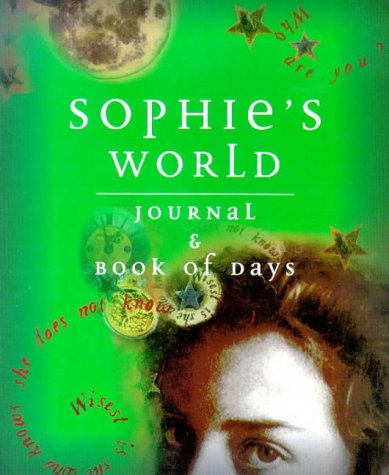
- BookSophie's World · Bookshop.org
Sophie's World by Jostein Gaarder follows Sophie as Alberto teaches her the history of philosophy, from the pre-Socratics to Jean-Paul Sartre.


Book links are Bookshop.org affiliate links. Curiate may earn a commission on purchases, at no extra cost to you — Bookshop.org also gives a share to independent bookshops.
Reading paths, built to arrive somewhere
Curiate turns what you are curious about into a short path — a quick lesson on an article, something to watch, and a book to go deep on. Free to browse.