Autism spectrum traits and experiences
Autism spectrum disorder is a condition involving differences in social communication and interaction, predictability and routine, sensory processing, focused interests, or repetitive behaviors. Its features are present from early childhood and typically persist throughout life. The lessons explore how autistic experiences relate to identity, wellbeing, development, and genetics.
2 articles, 1 video, 1 book · about 1 hr 44 min of reading and viewing
The reading path
- Readautism spectrum · Wikipedia · 60+ min read
Autistic burnout or fatigue is a prolonged state of mental and physical exhaustion. It is described as distinct from but similar to occupational burnout and is often linked to the pressure to hide autistic traits in social interactions, but no consensus definition exists and these concepts lack formal clinical criteria. Autism has a strong genetic basis, but it is unclear whether it is explained more by rare mutations with major effects or by rare multi-gene interactions of common genetic variants. Numerous genes are associated with autism, but most loci individually explain less than 1% of autism cases and have only small effects. Autistic people are significantly more likely to be LGBTQ than the general population. In a 2018 study comparing autistic and non-autistic participants, about 70% of the autistic group identified as non-heterosexual, compared to only about 30% of the non-autistic group.
- ReadAutism (Autism Spectrum Disorder) - Harvard Health · Harvard Health Blog · 5 min read
Children with autism may have intellectual impairment, language delays or no language, motor problems such as difficulty walking, clumsiness or low tone, and large heads; approximately 25% of children with ASD have large heads.
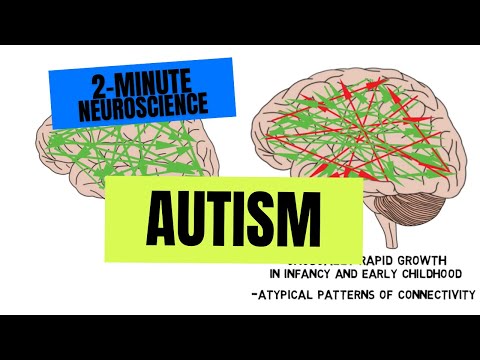
- Watch2-Minute Neuroscience: Autism · YouTube · 2 min watch
The neuroscience of autism includes potential factors and mechanisms involved in its development, including brain development and possible influences.
- BookThe Curious Incident of the Dog in the Night-Time · Bookshop.org
The Curious Incident by Mark Haddon is narrated by a 15-year-old boy described as "a mathematician with some behavioural difficulties"; although his condition is not stated, the blurb refers to Asperger syndrome. Haddon says the novel is about difference and seeing the world in a surprising and revealing way, rather than a specific disorder.



Book links are Bookshop.org affiliate links. Curiate may earn a commission on purchases, at no extra cost to you — Bookshop.org also gives a share to independent bookshops.
Reading paths, built to arrive somewhere
Curiate turns what you are curious about into a short path — a quick lesson on an article, something to watch, and a book to go deep on. Free to browse.