Economic development beyond growth
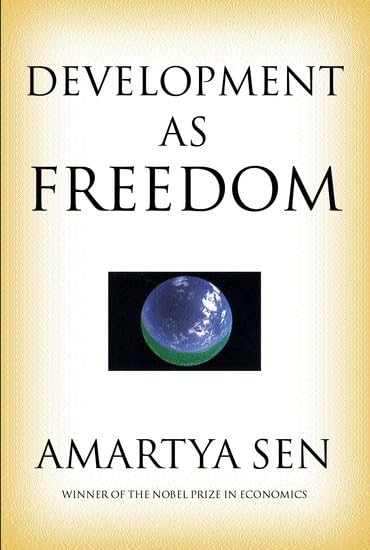
Alice Amsden found that developing economies grew at over 5% annually from 1950 to 1980, compared with 4% for developed economies, during what she called an unprecedented expansion in living standards, per capita income, wages, and poverty reduction. How can economic development be assessed through measures of well-being and freedoms, not growth alone? Economic development is the process of improving economic well-being and quality of life according to targeted goals and objectives; it is a policy intervention to improve people's well-being, distinct from economic growth. Development as Freedom by Amartya Sen is a 1999 book about international development.
2 articles, 1 book
The reading path
- Readeconomic development · Wikipedia
According to economist Alice Amsden's analysis of data from the World Bank, an international financial institution, developing economies grew at an average rate of over 5% annually from 1950 to 1980, outperforming developed economies, which grew at 4%. Amsden called this timeframe "a period of unprecedented expansion in living standards, per capita income, wages, and poverty reduction," linking economic development with improvements in human well-being. The World Bank compiles its "World Development Indicators" annually from officially recognized international sources, including national, regional and global estimates. These indicators provide measures used to assess economic development.
- BookDevelopment as Freedom · Bookshop.org
Kader Mia, a Muslim daily labourer, went into a hostile area during communal riots to seek work because his family had nothing to eat, and later died in the hospital. Amartya Sen, an economist and philosopher, says this shows how extreme poverty can undermine other freedoms and personal safety.
- ReadAmartya Sen - Biographical · Nobel Prize
Development as Freedom by Amartya Sen is a 1999 book about international development.

Book links are Bookshop.org affiliate links. Curiate may earn a commission on purchases, at no extra cost to you — Bookshop.org also gives a share to independent bookshops.
Reading paths, built to arrive somewhere
Curiate turns what you are curious about into a short path — a quick lesson on an article, something to watch, and a book to go deep on. Free to browse.