Economic indicators and lived sentiment
Economic indicators are statistics about economic activity that allow analysis of economic performance and predictions of future performance. How do indicators reveal economic change while leaving aspects of everyday well-being unmeasured? By the end, readers will understand how indicators track different stages of economic activity and why economic performance and lived well-being can tell different stories.
2 articles, 1 book
The reading path
- Readeconomic indicators · Wikipedia
The unemployment rate is a lagging indicator: employment tends to increase two or three quarters after an upturn in the general economy. Lagging indicators usually change after the economy as a whole does, and the Index of Lagging Indicators tends to follow changes in the overall economy. San Francisco uses the price of a one-bedroom apartment on Craigslist, weekend subway ridership numbers, parking garage usage, and monthly reports on passenger landings at the city's airport. Local governments often need to project future tax revenues. Coincident index is a measure that may be used to identify, after the fact, the dates of peaks and troughs in the business cycle. GDP, industrial production, personal income and retail sales change at approximately the same time as the whole economy, providing information about its current state.
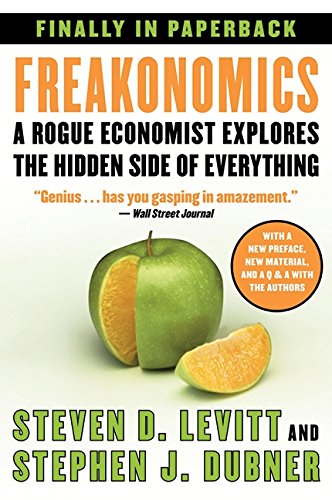
- BookFreakonomics: A Rogue Economist Explores the Hidden Side of Everything · Bookshop.org
GDP, or the value of production bought and sold in markets, includes spending on medical care and education, but does not address whether life expectancy or infant mortality have risen or fallen, or how much of the population can read, write, or do basic mathematics. The average U.S. worker works several hundred hours more per year than the average German worker, and GDP does not account for the German worker's extra vacation weeks.
- Read6.6: How Well GDP Measures the Well-Being of Society · Social Sci LibreTexts
Freakonomics by Steven D. Levitt and Stephen J. Dubner argues that economics is rooted in incentives and describes using data mining and detailed analysis of students' answers to infer teacher cheating. It also shows how data can be used to examine incentives and behavior.

Book links are Bookshop.org affiliate links. Curiate may earn a commission on purchases, at no extra cost to you — Bookshop.org also gives a share to independent bookshops.
Reading paths, built to arrive somewhere
Curiate turns what you are curious about into a short path — a quick lesson on an article, something to watch, and a book to go deep on. Free to browse.