Emancipation made ending slavery a Union war aim
In January 1862, Republican House leader Thaddeus Stevens called for total war, arguing that emancipation would ruin the rebel economy. How did emancipation shift the Civil War from preserving the Union toward ending slavery? The American Civil War was a war between the Union and the Confederacy. Battle Cry of Freedom by James M. McPherson is a military, political, and social history of the American Civil War, helping readers understand the conflict across these dimensions.
2 articles, 1 book
The reading path
- BookBattle Cry of Freedom: The Civil War Era · Bookshop.org
In his first inaugural address in early 1861, Lincoln declared that he had "no purpose, directly or indirectly, to interfere with slavery in the States where it exists." At the outset of the Civil War, Lincoln insisted that the war was about preserving the Union, but emancipation would turn it into a struggle focused on ending slavery. Secretary of State Seward urged Lincoln to wait to announce emancipation until the Union won a significant battlefield victory, and Lincoln took his advice. After Union troops halted Gen. Lee's Confederate advance near Sharpsburg, Maryland, in the Battle of Antietam on September 17, 1862, Lincoln issued the Emancipation Proclamation on January 1, 1863, which announced freedom for enslaved people as one of the North's war aims alongside preserving the Union.
- ReadEmancipation Proclamation · History.com
In January 1862, Thaddeus Stevens, the Republican leader in the House, called for total war against the rebellion, arguing that emancipation would ruin the rebel economy.
- ReadEmancipation Proclamation · New World Encyclopedia
Battle Cry of Freedom by James M. McPherson is a military, political, and social history of the American Civil War, helping readers understand the conflict across these dimensions.
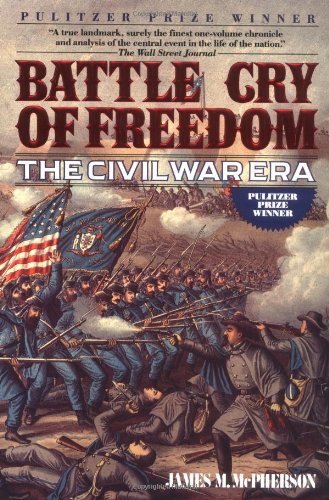

Book links are Bookshop.org affiliate links. Curiate may earn a commission on purchases, at no extra cost to you — Bookshop.org also gives a share to independent bookshops.
Reading paths, built to arrive somewhere
Curiate turns what you are curious about into a short path — a quick lesson on an article, something to watch, and a book to go deep on. Free to browse.