How carbon footprint traces global supply chains
A carbon footprint compares the total greenhouse gases an activity, product, company or country adds to the atmosphere, summed as carbon dioxide equivalent per unit of comparison. The lessons answer how emissions can be traced through global supply chains to understand what carbon footprints include. They follow emissions across organizational and national boundaries and through the goods and services people consume.
2 articles, 1 video, 1 book · about 1 hr 1 min of reading and viewing
The reading path
- Readcarbon footprint · Wikipedia · 34 min read
Consumption-based accounting traces demand for goods and services along the global supply chain to the end-consumer, while the production-based approach includes only impacts physically produced in the country in question. Consumption-based accounting redistributes emissions from production-based accounting and considers that emissions in another country are necessary for the home country's consumption bundle. Scope 3 emissions are all other indirect emissions derived from an organization's activities, from sources it does not own or control. The GHG Protocol's Corporate Value Chain (Scope 3) Accounting and Reporting Standard allows companies to assess their entire value chain emissions impact and identify where to focus reduction activities. For carbon footprints, life cycle assessment (LCA) can provide detailed information gathered on-site or by liaising with suppliers. But its artificial boundary can exclude further impacts from upstream suppliers, introducing significant truncation errors.
- ReadTourism responsible for 8% of global greenhouse gas emissions, study finds - Carbon Brief · Carbon Brief · 5 min read
Tourists contribute to climate change through travel and spending on goods and services. In a study published in Nature Climate Change, researchers considered these factors together to calculate tourism's "global carbon footprint", taking into account upstream supply chains, according to study author Dr Arunima Malik.
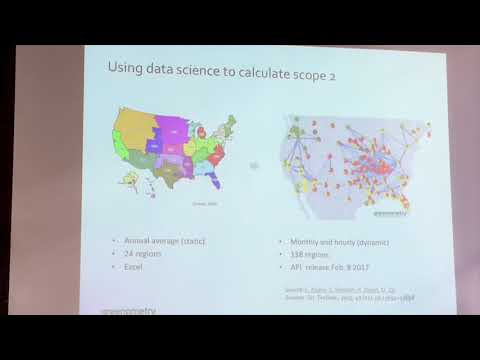
- WatchSession 4.2: Fixing the Carbon Footprint · YouTube · 22 min watch
The session covers how better measurement of the carbon footprints of products and services can help market forces address the climate crisis.
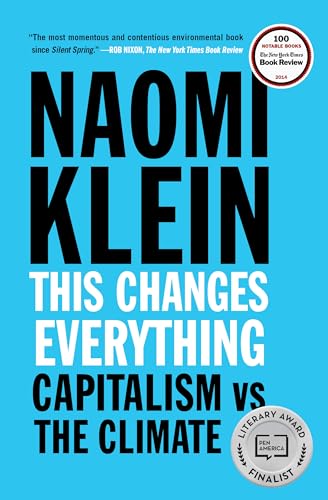
- BookThis Changes Everything: Capitalism vs. The Climate · Bookshop.org
This Changes Everything: Capitalism vs. the Climate is Naomi Klein's fourth book; it was published in 2014 by Simon & Schuster. Klein argues that the climate crisis cannot be addressed in the current era of neoliberal market fundamentalism, which encourages profligate consumption and has resulted in mega-mergers and trade agreements hostile to the health of the environment.


Book links are Bookshop.org affiliate links. Curiate may earn a commission on purchases, at no extra cost to you — Bookshop.org also gives a share to independent bookshops.
Reading paths, built to arrive somewhere
Curiate turns what you are curious about into a short path — a quick lesson on an article, something to watch, and a book to go deep on. Free to browse.