How crisis and trade carried plague through medieval Europe
The Black Death was a plague pandemic in Europe from 1346 to 1353, killing up to 50 million people and causing far-reaching population, economic, and cultural effects. What can you understand about how crisis and trade carried plague through medieval Europe? The lessons connect the movement of goods and people with the wider consequences of crisis.
2 articles, 1 book · about 1 hr 5 min of reading and viewing
The reading path
- Readthe impact of the black plague on medieval europe · Wikipedia · 60+ min read
The Black Plague was reportedly introduced to Europe via Genoese traders from their port city of Kaffa in the Crimea in 1347. As the disease took hold, Genoese traders fled across the Black Sea to Constantinople, where the disease first arrived in Europe in summer 1347. The Black Plague brought many attacks against Jewish communities; in the Strasbourg massacre of February 1349, about 2,000 Jews were murdered. The Black Plague's impact included the word "quarantine," whose roots lie in this period, though isolating people to prevent disease spread is older. In Ragusa, a thirty-day isolation period for new arrivals from plague-affected areas was implemented in 1377, later extended to forty days and named "quarantino," from the Italian word for "forty".
- ReadA Volcanic Eruption in 1345 May Have Triggered a Chain of Events That Brought the Black Death to Europe · Smithsonian Magazine · 3 min read
Some Italian cities imported grain from the Black Sea region, northeast of the Mediterranean, which may have brought fleas with the plague-causing bacterium, Yersinia pestis. Historian of medieval climate and epidemiology Martin Bauch says, "Once these hosts have died from the disease, the fleas turn to alternative mammals, including humans."
- BookYear of Wonders · Bookshop.org
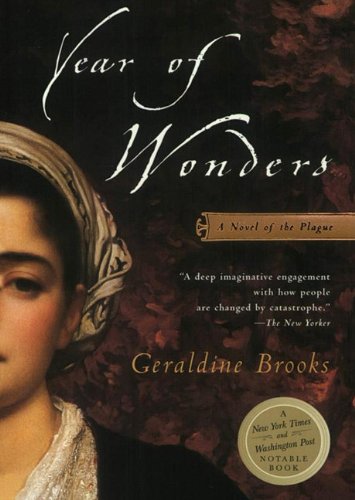
Year of Wonders: A Novel of the Plague is a 2001 international bestselling historical fiction novel by Geraldine Brooks. It was chosen as both a New York Times and Washington Post Notable Book.

Book links are Bookshop.org affiliate links. Curiate may earn a commission on purchases, at no extra cost to you — Bookshop.org also gives a share to independent bookshops.
Reading paths, built to arrive somewhere
Curiate turns what you are curious about into a short path — a quick lesson on an article, something to watch, and a book to go deep on. Free to browse.