How epidemiology tracks disease patterns
Epidemiology studies how health and disease are distributed and shaped in populations, and applies that knowledge to prevent disease. How can evidence help identify health risks, understand patterns of illness, and guide action to prevent further cases? The lessons connect study methods, causes, exposures, and prevention to build a broader understanding of how disease affects populations.
4 articles, 1 video, 1 book · about 1 hr 5 min of reading and viewing
The reading path
- Readepidemiology · Wikipedia · 38 min read
Epidemiology in humanitarian contexts relies on vital registries to collect mortality data, but registries can be non-existent, unreliable, or inaccessible. Mortality is therefore often inaccurately measured using prospective demographic surveillance or retrospective mortality surveys. Epidemiologists use descriptive, analytic, and experimental study designs to assess data, examine associations, or test treatments and other interventions. Where possible, epidemiological studies aim to reveal unbiased relationships between exposures such as alcohol or smoking, biological agents, stress, or chemicals and mortality or morbidity. Epidemiologists emphasize that the "one cause, one effect" understanding is a simplistic misbelief: most outcomes, whether disease or death, are caused by a chain or web of many component causes. Epidemiologists use gathered data to track disease patterns and make informed assertions about which relationships are causal.
- ReadPrinciples of Epidemiology | Lesson 1 - Section 1 · archive.cdc.gov · 6 min read
In epidemiology, when a patient has diarrheal disease, the epidemiologist identifies the exposure, meaning what caused the illness, or its source, how many others may have been similarly exposed, the potential for further spread, and interventions to prevent additional cases or recurrences. The clinician usually focuses on treating and caring for the individual.
- ReadJohn Snow and the Birth of Epidemiology - JSTOR Daily · JSTOR Daily · 2 min read
During the 1854 epidemic, Reverend Henry Whitehead, who initially doubted Snow's thesis, interviewed locals who hadn't gotten cholera and found they hadn't used the Broad Street pump, reinforcing Snow's research.
- ReadEl Niño shifts cholera burden onto East Africa - Carbon Brief · Carbon Brief · 4 min read
El Niño is a global weather phenomenon originating in the Pacific Ocean that affects rainfall patterns worldwide. A statistical model of reported cholera cases in more than 3,000 locations found that, between 2000 and 2014, East Africa had almost 50,000 more cases during El Niño years, while southern Africa had around 32,000 fewer.
- WatchIntro to Epidemiology: Crash Course Public Health #6 · YouTube · 15 min watch
Epidemiology studies disease by interpreting data and building mathematical models. The Rothman Causal Pie is one tool it uses to think about causes.
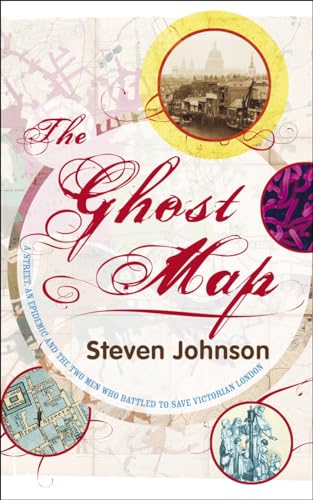
- BookThe Ghost Map · Bookshop.org
The Ghost Map by Steven Johnson describes the 1854 Broad Street cholera outbreak through John Snow's epidemiological work in Soho and Henry Whitehead's knowledge of the local community, which helped determine the outbreak's initial cause. It also describes how Snow figured out that cholera contamination came from drinking water from the Broad Street pump.


Book links are Bookshop.org affiliate links. Curiate may earn a commission on purchases, at no extra cost to you — Bookshop.org also gives a share to independent bookshops.
Reading paths, built to arrive somewhere
Curiate turns what you are curious about into a short path — a quick lesson on an article, something to watch, and a book to go deep on. Free to browse.