How evolution shapes social behavior in sociobiology
Sociobiology is a field of biology that aims to explain social behavior in terms of evolution. It argues that selection pressure led to the genetic evolution of advantageous social behavior.
3 articles, 1 book · about 19 min of reading and viewing
The reading path
- Readsociobiology · Wikipedia · 13 min read
Sociobiology uses Nikolaas Tinbergen's four questions to search for explanations of animal behavior. Two, often called "ultimate explanations," concern the adaptive function, or how a behavior helps in the environment where it evolved, and the historical evolutionary process that resulted in this functionality. At a 1976 American Anthropological Association convention, cultural anthropologist Napoleon Chagnon scheduled sessions on sociobiology that other scholars tried to cancel with what he later described as "Impassioned accusations of racism, fascism and Nazism". Newly dominant male lions often kill cubs in the pride that they did not sire. Sociobiology uses this example to show how behavior can be partly explained as an outcome of natural selection.
- ReadWhy Do Animals Share? - JSTOR Daily · JSTOR Daily · 3 min read
When a returning vampire bat shares a regurgitated blood meal with a hungry bat, both may live to bite another day. Individuals behave altruistically when they benefit another individual of their species at some cost to themselves, a behavior that is hard to understand from an evolutionary point of view.
- ReadMice in a "Big Brother" Setup Develop Social Structures - Neuroscience News · Neuroscience News · 3 min read
In sociobiology, close observations of mice revealed how one individual became "king" of the group, attaining dominance over the others, both male and female. The team identified individual and social behaviors, including seeking specific companions, avoiding certain individuals and attacking others.
- BookSociobiology: The New Synthesis · Bookshop.org
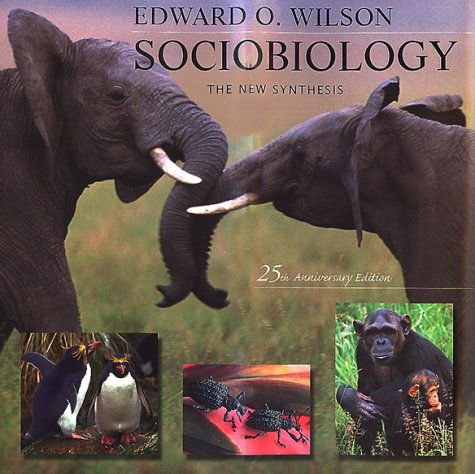
Sociobiology: The New Synthesis by Edward O. Wilson argues in its final chapter that natural selection has made humans more flexible in social organization than any other species.


Book links are Bookshop.org affiliate links. Curiate may earn a commission on purchases, at no extra cost to you — Bookshop.org also gives a share to independent bookshops.
Reading paths, built to arrive somewhere
Curiate turns what you are curious about into a short path — a quick lesson on an article, something to watch, and a book to go deep on. Free to browse.