How natural selection reshapes populations in evolutionary biology
Evolutionary biology is the part of biology that studies natural selection, mutation, genetic drift, and gene flow, the processes that account for life's unity and diversity. These lessons answer how natural selection reshapes populations and help readers understand how traits become more or less common. They follow the relationship between traits, survival, reproduction, and evolutionary change.
3 articles, 1 video, 1 book · about 31 min of reading and viewing
The reading path
- ReadThe evolution of bacteria · Works in Progress · 7 min read
Microbes let scientists reproduce evolution under laboratory conditions and test hypotheses about how natural selection works: better-adapted individuals tend to survive and reproduce more successfully, so beneficial traits increase in frequency over generations. Natural selection is driven by births, deaths, mutation, selection, and competition.
- ReadFive Astounding Ways Humans Are Driving Animal Evolution, Including Causing Lizards to Grow Longer Legs and Leading Moth Populations to Become Darker · Smithsonian Magazine · 7 min read
Pacific field crickets in Hawaii evolved quieter songs through physical changes to the wing "instruments" that create them. Crickets producing the new songs are less attractive to parasitic flies, but still manage to attract female crickets.
- Readevolutionary biology · Wikipedia · 8 min read
Evolutionary biology emerged as an academic discipline during the modern synthesis in the 1930s and 1940s, a period when many biologists helped shape the discipline. Charles Darwin proposed evolution by natural selection in 1859. Modern evolutionary synthesis is an account of evolution that agrees on which forces contribute to evolution, but not their relative importance. It was devised when the molecular basis of genes was unknown.
- WatchNatural selection and adaptation | Mechanisms of evolution | High school biology | Khan Academy · YouTube · 9 min watch
Natural selection leads to adaptation: organisms with advantageous heritable traits survive and reproduce more often, so those traits become more common across generations.
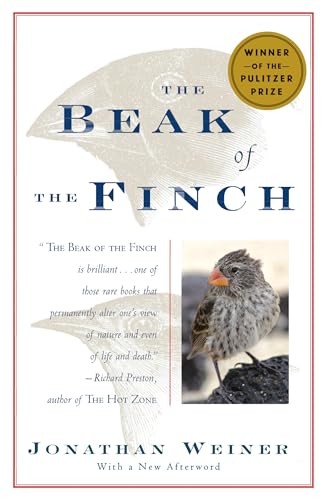
- BookThe Beak of the Finch: A Story of Evolution in Our Time · Bookshop.org
The Beak of the Finch by Jonathan Weiner describes how the Grants and their students observed evolution in action: after droughts or floods, finch traits with fitness consequences responded to natural selection and were heritable. Their observations showed scientists that evolution can be seen in real time.


Book links are Bookshop.org affiliate links. Curiate may earn a commission on purchases, at no extra cost to you — Bookshop.org also gives a share to independent bookshops.
Reading paths, built to arrive somewhere
Curiate turns what you are curious about into a short path — a quick lesson on an article, something to watch, and a book to go deep on. Free to browse.