How social disadvantage shapes health disparities
Health disparities are differences in health outcomes related to unequal access to social determinants of health, especially wealth, power and prestige, with consistent deprivation linked to worse outcomes. The lessons answer how social disadvantage shapes health and help readers understand why unequal social conditions are reflected in health. They connect social status, education, place and access to care as themes in that relationship.
2 articles, 1 video, 1 book · about 2 hr 40 min of reading and viewing
The reading path
- Readhealth disparities · Wikipedia · 60+ min read
Health disparities can affect lower-status members of institutions: the Whitehall I and II studies examined cardiovascular disease and other health risks among British civil servants. Even after controlling for lifestyle factors, lower-status members had increased mortality and morbidity on a sliding downward scale from their higher-status counterparts. Health disparities include unequal access to care: people in rural areas, especially poor rural areas, have access to fewer health care resources. Although 20 percent of the U.S. population lives in rural areas, only 9 percent of physicians practice in rural settings. In Tajikistan, mothers with primary education consulted a doctor during pregnancy at significantly lower rates (72%) than mothers with a secondary education (77%), technical training (88%) or a higher education (100%). Education is closely intertwined with economic status and is an important factor in healthcare use, linking social disadvantage with differences in prenatal and maternal care.
- ReadReducing Health Disparities Through a Whole-Person, Whole-Population Approach · Fierce Healthcare · 3 min read
Health disparities remain a stark reality in the U.S. despite scientific evidence, years of discourse and efforts to incorporate social determinants of health, the non-clinical aspects of people's lives, into care models. The COVID-19 pandemic has disproportionately affected low-income communities and communities of color. The World Health Organization defines SDoH as "the conditions in which people are born, grow, live, work and age." It is estimated that SDoH are responsible for the majority of a health outcome and that medical care accounts for less than 30%.
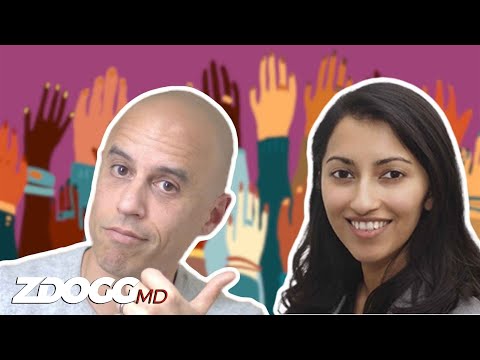
- WatchFighting Racial Inequity & Health Disparities (w/Dr. Shreya Kangovi) · YouTube · 1 hr 16 min watch
Dr. Shreya Kangovi explains what community health workers do, what trials using them have shown, and how they may help address racial inequities in healthcare.
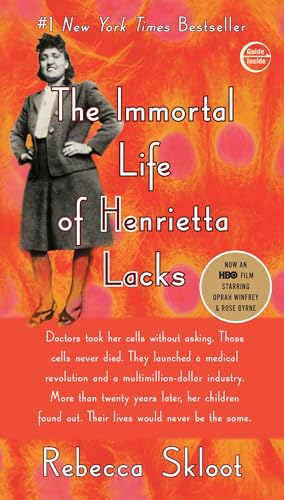
- BookThe Immortal Life of Henrietta Lacks · Bookshop.org
The Immortal Life of Henrietta Lacks by Rebecca Skloot describes how Henrietta's cells were taken without her knowledge, her family was used in research without informed consent, and her family never saw profits from the multimillion-dollar industry built on the cells.

Book links are Bookshop.org affiliate links. Curiate may earn a commission on purchases, at no extra cost to you — Bookshop.org also gives a share to independent bookshops.
Reading paths, built to arrive somewhere
Curiate turns what you are curious about into a short path — a quick lesson on an article, something to watch, and a book to go deep on. Free to browse.