How social identity theory shapes us and them
Social identity theory is about how people understand part of themselves through belonging to social groups, and how they distinguish their group from others. The lessons answer how group identity shapes our sense of us and them. They trace how belonging and perceived relations between groups shape people's responses to other groups.
2 articles, 1 video, 1 book · about 48 min of reading and viewing
The reading path
- ReadSocial Identity Theory (Tajfel & Turner, 1979) · Simply Psychology · 23 min read
Social identity theory explains how people define part of themselves through the social groups they belong to, from nationality and religion to social class. Because people are motivated to see their own group positively, they favorably compare their in-group ("us") against relevant out-groups ("them"), a process that can produce favoritism, prejudice, stereotyping and discrimination.
- Readsocial identity theory · Wikipedia · 20 min read
Social identity theory's "self-esteem hypothesis" predicts that self-esteem relates to in-group bias in two ways: successful intergroup discrimination elevates self-esteem, while depressed or threatened self-esteem promotes intergroup discrimination. Social identity theory posits that an individual's choice of behavior is dictated largely by the perceived intergroup relationship. The choice of strategy depends on perceived group-boundary permeability and on the perceived stability and legitimacy of the intergroup status hierarchy.
- WatchThe sibling rivalry that divided a town - Jay Van Bavel and Dominic Packer · YouTube · 5 min watch
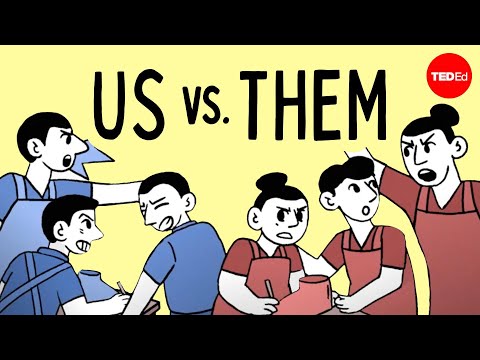
Jay Van Bavel and Dominic Packer investigate how a fight between two shoemaker brothers divided their town, and explore the psychology of social identity and in-group bias.
- BookThe Social Animal · Bookshop.org
The Social Animal by Elliot Aronson explains how human minds operate and interact, and covers the causes of prejudice.

Book links are Bookshop.org affiliate links. Curiate may earn a commission on purchases, at no extra cost to you — Bookshop.org also gives a share to independent bookshops.
Reading paths, built to arrive somewhere
Curiate turns what you are curious about into a short path — a quick lesson on an article, something to watch, and a book to go deep on. Free to browse.