How Zainichi Koreans came to live in Japan
The Korean community in Japan is the second largest ethnic minority group in Japan after Chinese immigrants. The majority are Zainichi Koreans, often known simply as Zainichi: ethnic Koreans who immigrated to Japan during the Japanese rule of Korea and are citizens or permanent residents of Japan, and their descendants.
2 articles, 1 book · about 49 min of reading and viewing
The reading path
- Readthe korean community in japan · Wikipedia · 41 min read
The Korean community in Japan had grown to 419,000 by 1930, after thousands migrated or were recruited for work in the 1920s. In 1939, the Japanese government introduced the National Mobilization Law and conscripted Koreans for wartime labor; those brought to Japan were forced to work, often under appalling conditions. For Zainichi Koreans, repatriation to North Korea was initially far more popular than repatriation to the South, despite 97% originating from the southern half of the Korean Peninsula. Approximately 70,000 Zainichi repatriated to North Korea during a two-year period from 1960 through 1961. A 1988 report by Mindan youth group Zainihon Daikan Minkoku Seinendan surveyed first-generation Koreans' reasons for immigrating to Japan. The survey found 39.6% cited economics, 13.3% conscription, 17.3% marriage and family, 9.5% study/academic, 20.2% other reasons and 0.2% unknown.
- Read"FSI -Koreans in Japan" · fsi.stanford.edu · 8 min read
Soren, the pro-North Korean organization of ethnic Koreans in Japan, launched a repatriation project in the late 1950s that sent 93,340 people to North Korea, including 6,731 Japanese. The project effectively ended in the early 1960s, though officially it ended in 1984.
- BookPachinko · Bookshop.org
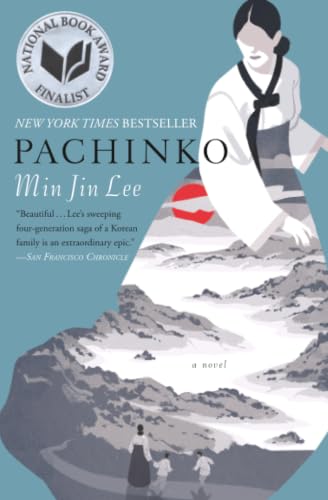
Pachinko by Min Jin Lee follows Sunja and her family from early 1900s Korea to Japan, describing their exile, struggles, and triumphs as they face questions of faith, family, and identity.

Book links are Bookshop.org affiliate links. Curiate may earn a commission on purchases, at no extra cost to you — Bookshop.org also gives a share to independent bookshops.
Reading paths, built to arrive somewhere
Curiate turns what you are curious about into a short path — a quick lesson on an article, something to watch, and a book to go deep on. Free to browse.