Indigenous land rights protests and law in Australia
The Indigenous land rights movement in Australia concerns Aboriginal and Torres Strait Islander people's rights and interests in land, and may also include the struggle for those rights. As of 2020, those rights and interests were formally recognised over around 40 per cent of Australia's land mass. This path follows how protest and legal changes shaped land rights, and what that change could mean.
2 articles, 1 book
The reading path
- Readthe indigenous land rights movement in australia · Wikipedia
The Aboriginal Land Rights Act 1976 followed protests and recommendations by the Woodward Royal Commission, establishing a basis for Aboriginal people in the Northern Territory to claim rights to land based on traditional occupation. Claimants could provide evidence of their traditional association with land, and the procedure transferred almost 50 per cent of land in the Northern Territory (around 600 000 km2) to collective Aboriginal ownership. The 1963 Yolngu Bark Petition and the 1966 Wave Hill Walk-Off were important Aboriginal protests that preceded the passing of land rights legislation in Australia in the late 20th century. The Aboriginal Lands Trust Act 1966 (SA) established a Trust governed by a Board composed solely of Aboriginal people, and allowed parcels of Aboriginal land held by the SA Government to be handed to the Trust. On 14 July 1972, around 6,000 protesters marched to Sydney Town Hall, and unionists from several trades had voted to strike for half a day in support of Aboriginal people. Around 2,000 students joined the protest, while protests in Newcastle, Brisbane, and Darwin rallied under "Ningla-A-na" (Arrernte for "hungry land"), amid a powerful movement for the recognition of Indigenous land rights.
- BookThe Yield · Bookshop.org
Terra nullius is the assumption that Aboriginal and Torres Strait Islanders had no concept of land ownership before British settlers arrived and could not properly use the land. On June 3, 1992, six of seven High Court judges recognized the Meriam people's traditional land entitlement as native title, and declared terra nullius a fiction.
- ReadA Brief History of the Aboriginal Lands Right Movement | TheCollector · TheCollector
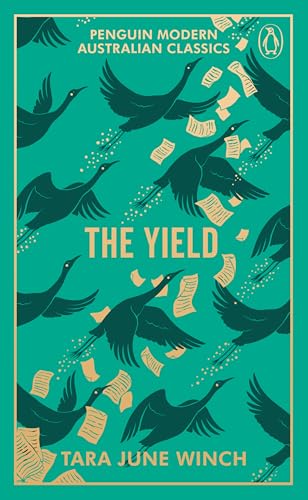
The Yield is a 2019 novel by Aboriginal Australian author Tara June Winch. The novel follows a Wiradjuri woman returning home to Australia amidst a family tragedy.

Book links are Bookshop.org affiliate links. Curiate may earn a commission on purchases, at no extra cost to you — Bookshop.org also gives a share to independent bookshops.
Reading paths, built to arrive somewhere
Curiate turns what you are curious about into a short path — a quick lesson on an article, something to watch, and a book to go deep on. Free to browse.