Intellectual property rights and their best-known types
Intellectual property rights empower creators or owners to use an intellectual property asset and prevent others from doing so, with patents, copyrights, trademarks, and trade secrets among the best known types. The lessons answer how ideas become protected property and what that protection means. They trace the themes of ownership, expression, disclosure, and incentives.
2 articles, 1 video, 1 book · about 1 hr 58 min of reading and viewing
The reading path
- Readintellectual property rights · Wikipedia · 56 min read
A patent gives an inventor or their successor-in-title the right to exclude others from making, using, selling, offering to sell, and importing an invention for a limited period, in exchange for public disclosure. Patent owners must disclose valuable information about their inventions to enrich public knowledge and stimulate innovation. Copyright may apply to creative, intellectual, or artistic forms, or "works," but not to ideas and information themselves, only to the form or manner in which they are expressed. A trade secret is a formula, practice, process, design, instrument, pattern, or compilation of information not generally known or reasonably ascertainable that can give a business an economic advantage over competitors and customers. In the United States, trade secrets are protected by a combination of state and federal laws prescribing civil and criminal penalties for misappropriation.
- Read"Intellectual Property" · plato.stanford.edu · 50 min read
A 1421 statute of the Republic of Florence recognized authors' and inventors' rights to the products of their intellectual efforts and built in an incentive mechanism. That mechanism became a prominent feature of Anglo-American intellectual property protection.
- WatchCopyright, Exceptions, and Fair Use: Crash Course Intellectual Property #3 · YouTube · 12 min watch
Copyright is enforced, and it has exceptions such as Fair Use, which can be hard to define.
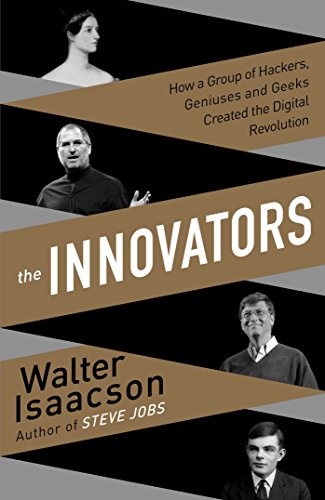
- BookThe Innovators: How a Group of Hackers, Geniuses, and Geeks Created the Digital Revolution · Bookshop.org
The Innovators by Walter Isaacson tells the story of digital-age pioneers, hackers, inventors, and entrepreneurs, describing how they collaborated and why working as teams made them more creative.

Book links are Bookshop.org affiliate links. Curiate may earn a commission on purchases, at no extra cost to you — Bookshop.org also gives a share to independent bookshops.
Reading paths, built to arrive somewhere
Curiate turns what you are curious about into a short path — a quick lesson on an article, something to watch, and a book to go deep on. Free to browse.