Sega and Nintendo's 1990s console rivalry
The history of the gaming console wars is the competition between two or more video game console manufacturers. How did Sega and Nintendo compete over who their consoles were for? By the end, readers will understand how product design, marketing, and debates about game content shaped their rivalry.
2 articles, 1 book
The reading path
- Readthe history of the gaming console wars · Wikipedia
At the 1993 congressional hearings, Nintendo of America vice president Howard Lincoln and Sega of America vice president Bill White accused each other's companies of creating the issue. Lincoln said Nintendo had taken a curated approach and violent games had no place in the market; White said Sega targeted an older audience and had created a ratings system, while pointing out that Nintendo titles also incorporated violence. 16-bit is a processor type, and Sega used 16-bit processor boards in its arcade technology to build the Mega Drive, with "16-bit" emblazoned on its case to emphasize this feature. The Mega Drive was designed to look more mature and less like a toy to appeal to older gamers.
- Read"How a Retro Rivalry Ignited the Most Heated Feud in Video Games" · inverse.com
After the Sega Genesis arrived in 1989 and Nintendo answered with the SNES in 1990, Sega of America CEO Tom Kalinske launched an ad campaign framing the SNES as a children's console and the Genesis as one for adults. Kalinske said Nintendo was "clearly the preference of the child gamer" and that he wanted to "hammer the older audience" with aggressive marketing and games appealing to teenagers and college-age males.
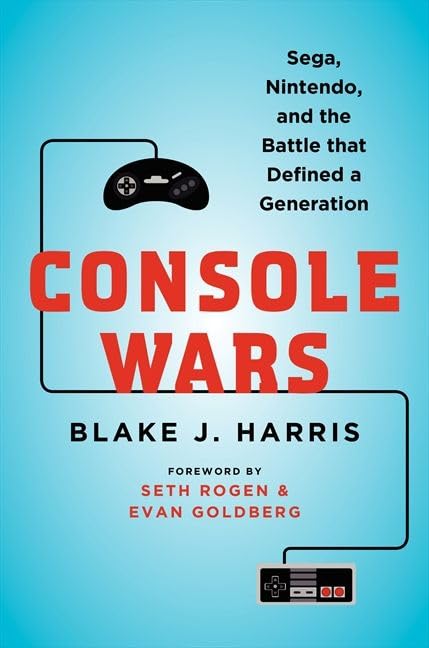
- BookConsole Wars: Sega, Nintendo, and the Battle that Defined a Generation · Bookshop.org
Console Wars, by author Blake J. Harris, traces Tom Kalinske's move from Mattel CEO to leading Sega of America, where Sega's Genesis had sold fewer than 500,000 units amid poor marketing and a weak game library. The book's synopsis shows the company's precarious position as Kalinske considers taking the job.

Book links are Bookshop.org affiliate links. Curiate may earn a commission on purchases, at no extra cost to you — Bookshop.org also gives a share to independent bookshops.
Reading paths, built to arrive somewhere
Curiate turns what you are curious about into a short path — a quick lesson on an article, something to watch, and a book to go deep on. Free to browse.