Social contract theory and political authority
Social contract theory says a legitimate state arises when citizens agree to give up some freedoms in exchange for protection of their remaining rights or the maintenance of social order. The term takes its name from Jean-Jacques Rousseau's 1762 book, The Social Contract. The lessons help readers understand why people agree to political authority and how that agreement is understood.
2 articles, 1 book
The reading path
- Readsocial contract theory · Wikipedia
John Locke, a philosopher, believed people would lack security in their rights and live in fear without government to defend them. He argued that people would agree to a state providing, in part, a "neutral judge" and delegate their absolute right of violence so government could enforce law collectively; if government violated fundamental rights, people could resume their original liberty. Lysander Spooner argued that a supposed social contract cannot justify taxation when government uses force against people who do not wish to enter it: under the will theory, a contract must be voluntary, so he considered such an agreement illegitimate. The abolitionist made a similar argument about the unconstitutionality of slavery in the US.
- Read"Social Contract Theory" · iep.utm.edu
Thomas Hobbes, a political theorist, argues that people will submit to a Sovereign because their self-interest and reason lead them to seek civil society. In his hypothetical State of Nature, people are roughly equal, resources are limited, and no power can force cooperation; Hobbes concludes it would be "the state of perpetual and unavoidable war."
- BookThe Social Contract · Bookshop.org
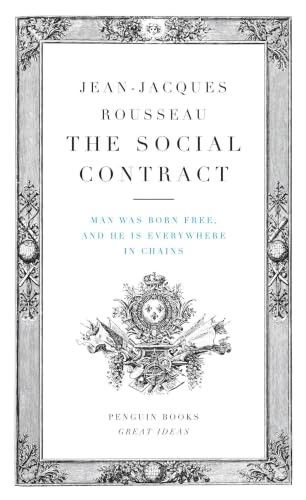
The Social Contract by Jean-Jacques Rousseau makes the case that sovereign power should come from a pact among a state's citizens, not anyone's natural right to rule others, then considers how liberty, law, freedom, and justice follow from this premise.

Book links are Bookshop.org affiliate links. Curiate may earn a commission on purchases, at no extra cost to you — Bookshop.org also gives a share to independent bookshops.
Reading paths, built to arrive somewhere
Curiate turns what you are curious about into a short path — a quick lesson on an article, something to watch, and a book to go deep on. Free to browse.