Startups and innovation under uncertainty and failure
Startups and innovation are companies or projects, typically undertaken by entrepreneurs, that seek, develop, and validate a scalable business model, often with an innovative stance, potential for rapid growth, external funding, and vulnerability. What can founders understand and do to make decisions amid uncertainty, learn from failure, and adapt their ventures? The lessons follow how experimentation and flexibility can help founders navigate uncertainty and setbacks.
2 articles, 1 book
The reading path
- Readstartups and innovation · Wikipedia
Entrepreneurs often become overconfident about their startups and their influence on an outcome, a case of the illusion of control. Because of a lack of information, high uncertainty, and the need to decide quickly, founders generally use many heuristics and exhibit biases in leadership decisions; startups use several action principles to generate evidence quickly and reduce the downside effect of biases such as overconfidence, illusion of control, and escalation of commitment. Entrepreneurs who restart in the same sector with more or less the same activities have an increased chance of becoming better entrepreneurs, suggesting failure can inform a stronger return. Yet some studies indicate that restarters are more heavily discouraged in Europe than in the US. Within-person is when the same person feels more uncertain at one time than another. In a study, when entrepreneurs felt more uncertain, they identified more opportunities, but entrepreneurs who perceived more uncertainty than others did not identify more opportunities than others did.
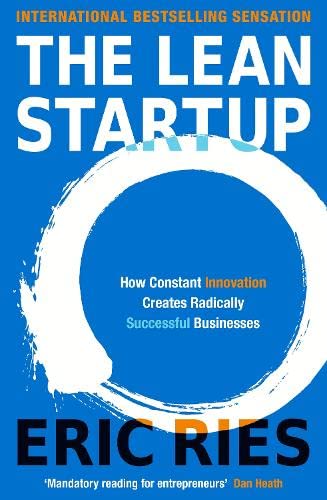
- BookThe Lean Startup · Bookshop.org
IMVU's registrations rose like a hockey stick, but the chart hid marketing costs and did not show whether users valued the service. On Facebook, likes and total accounts may have their place but can be considered vanity metrics, while average time spent on Facebook per day, per user reveals user engagement, platform relevance, and overall user satisfaction.
- Read10 Methods From The Lean Startup · hypeinnovation.com
The Lean Startup by Eric Ries outlines a methodology for refining an offering through a minimum viable product, user feedback, and experimentation instead of long-term business planning.
Book links are Bookshop.org affiliate links. Curiate may earn a commission on purchases, at no extra cost to you — Bookshop.org also gives a share to independent bookshops.
Reading paths, built to arrive somewhere
Curiate turns what you are curious about into a short path — a quick lesson on an article, something to watch, and a book to go deep on. Free to browse.