Why a few startups drive venture capital returns
Venture capital is a form of private equity financing where firms or funds invest in early stage companies for an ownership stake, despite high uncertainty and frequent failures. The lessons answer why a few startups drive venture capital returns and help readers understand how those outcomes shape a fund's overall results. They connect startup risk with the way investors think about returns across a portfolio.
2 articles, 1 book · about 59 min of reading and viewing
The reading path
- ReadWhy venture capital returns come from a few startups · Wikipedia · 56 min read
ARDC's 1957 funding of Digital Equipment Corporation (DEC) became a standout venture capital return: after DEC's initial public offering in 1968, it was valued at more than $355 million. The investment returned over 1200 times its cost, an annualized rate of return of 101% to ARDC. Venture capital's public successes in the 1970s and early 1980s, including Digital Equipment Corporation, Apple Inc., and Genentech, led to a major proliferation of investment firms. From a few dozen firms at the start of the decade, there were over 650 by the end of the 1980s, each searching for the next major "home run".
- ReadThe Power Law in Venture Capital · patrickmenendez.substack.com · 3 min read
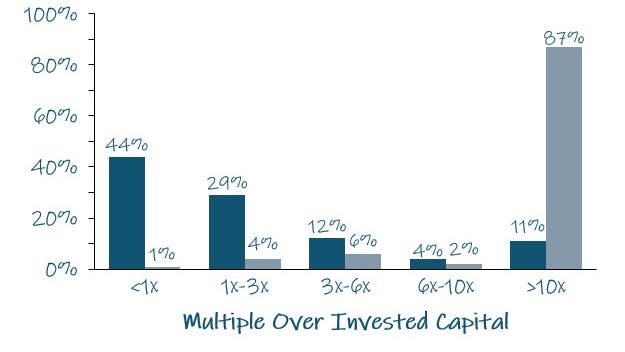
In a simplified example where a fund invests the same amount in each startup, the top investment produces over 80% of the portfolio's returns, and the top two produce over 90%.
- BookThe Power Law · Bookshop.org
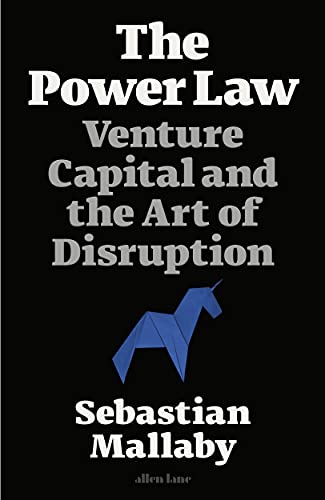
The Power Law is a book by Sebastian Mallaby, published in 2022, on how the American venture capital industry developed.
Book links are Bookshop.org affiliate links. Curiate may earn a commission on purchases, at no extra cost to you — Bookshop.org also gives a share to independent bookshops.
Reading paths, built to arrive somewhere
Curiate turns what you are curious about into a short path — a quick lesson on an article, something to watch, and a book to go deep on. Free to browse.