How hedging shapes hedge funds
Hedge funds are pooled investment funds that use liquid assets and complex trading and risk management techniques, including short selling, leverage, and derivatives, to aim to improve performance and insulate returns from market risk. Alfred W. Jones is credited with coining the phrase "hedged fund" and creating the first hedge fund structure in 1949.
2 articles, 1 video, 1 book · about 1 hr 35 min of reading and viewing
The reading path
- Readhedge funds · Wikipedia · 60+ min read
Equity market neutral strategies exploit differences in stock prices by taking long positions, buying stocks, and short positions, selling stocks, within the same sector, industry, market capitalization, or country, which also creates a hedge against broader market factors. Commodity trading advisors (CTAs), a global macro sub-strategy, trade in commodities such as gold and financial instruments, including stock indices. Hedge funds can reduce some investment risks through hedging, but this usually increases others, such as operational and model risk, so overall risk is reduced but cannot be eliminated. For investors who already hold large quantities of equities and bonds, hedge funds may provide diversification and reduce overall portfolio risk.
- ReadLesson 3.1: What is a hedge fund? | Preqin Academy · preqin.com · 3 min read
Alfred Jones bought assets he believed would rise in value relative to the overall performance of the market, and sold short assets whose price he expected to decrease. This led to a multi-trillion dollar industry with opportunities to invest across sectors and achieve positive returns, regardless of market direction. Hedge funds can invest across a wide range of asset classes and instruments because their light levels of regulation leave them less constrained than many public or mutual funds. Their investment strategies differ considerably, including in portfolio construction and risk management.
- WatchHedge Funds Explained: Why Hedge Funds Aren't Really Hedged · YouTube · 16 min watch
The meaning of 'hedge fund' has changed, and hedge funds play a particular role in high finance.
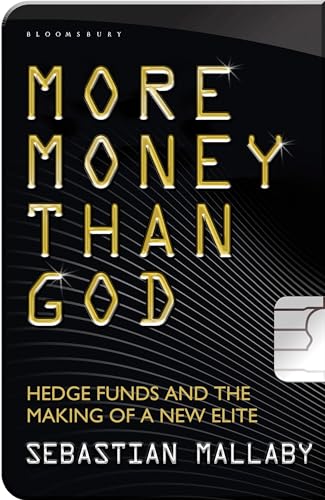
- BookMore Money Than God: Hedge Funds and the Making of a New Elite · Bookshop.org
More Money Than God by Sebastian Mallaby tells the inside story of hedge funds, based on three hundred hours of interviews, tracing their origins in the 1960s and 1970s and their role in the financial crisis of 2007-2009.

Book links are Bookshop.org affiliate links. Curiate may earn a commission on purchases, at no extra cost to you — Bookshop.org also gives a share to independent bookshops.
Reading paths, built to arrive somewhere
Curiate turns what you are curious about into a short path — a quick lesson on an article, something to watch, and a book to go deep on. Free to browse.