Curiate

Finance curations

How money moves, grows and gets lost, from household budgets to global markets. Quick lessons on saving, investing and the systems that connect them, with the sources one tap away.

Collections in Finance

How M-Pesa turned a lending pilot into everyday transfers

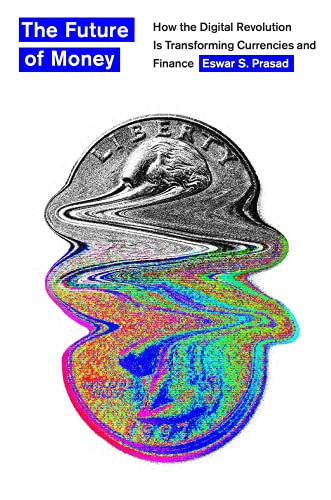
In Kenya, pilot studies of M-Pesa, a mobile payment service, found people were using it for general money transfers, so the application was redesigned. How did a pilot meant to help micro-lenders and their clients access finance shape mobile payment solutions in emerging markets? The Future of Money by Eswar Prasad examines how digital technology is changing money, banking, and finance, placing mobile payments in the changing landscape of economies and finance.

by Curiate·the development of mobile payment solutions in emerging markets·1 upvote
Who controls money and debt in monetary systems

Monetary systems are ways governments manage money in a country's economy, using forms such as commodity money, representative money, and modern fiat money. The lessons answer who controls money and debt, and help readers understand how authority over money is exercised. They trace the themes of money creation, public oversight, and the rules that shape monetary power.

by Curiate·monetary systems

How saving comes before investing in personal finance

Personal finance is how an individual or family manages money to budget, save, and spend in a controlled way, while considering risks and future needs. What does it take to plan for financial goals, and why does saving come before investing? The lessons connect everyday money management with planning for future needs and building financial security.

by Curiate·personal finance

Economic inequality, measurement, taxes, and everyday effects

Economic inequality is an umbrella term for income, wealth, and consumption inequality, describing how money or wealth is distributed among people. How can inequality be measured, and how does it relate to taxes, growth, debt, and responses to downturns? By the end, readers will understand how unequal resources are measured and how they connect to economic conditions and people's choices.

by Curiate·Economic inequality

How hedging shapes hedge funds

Hedge funds are pooled investment funds that use liquid assets and complex trading and risk management techniques, including short selling, leverage, and derivatives, to aim to improve performance and insulate returns from market risk. Alfred W. Jones is credited with coining the phrase "hedged fund" and creating the first hedge fund structure in 1949.

by Curiate·hedge funds

Who creates value in sustainable finance

Sustainable finance is a set of practices, standards, norms, regulations, and products that pursue financial objectives while considering environmental, social, and governance factors; it connects the financial system with the economy and its populations by seeking a growth objective.

by Curiate·sustainable finance

Stock market analysis, trends, and company fundamentals

Stock market analysis studies past market data, mainly prices and trading volume, to assess and forecast price direction. What can readers understand about how investors assess markets and how strategies can be tested against historical data. The lessons connect market analysis with company fundamentals, trend analysis, and the limits of automated testing.

by Curiate·stock market analysis

How market prices shape investment analysis

Investment analysis is the process of determining the economic value of an asset, business, security, or liability. What shapes an investment's value, and how do market prices help us understand it? The lessons connect valuation to the way prices reflect comparisons, risk, and return.

by Curiate·investment analysis

Taxation principles and wealth distribution

Taxation principles concern mandatory charges governments impose to fund public spending or regulate economic activity, transferring wealth from households or businesses to government. The lessons answer how taxes distribute wealth and help readers understand who ultimately bears their costs. They consider how tax design, economic effects, and administrative choices shape that distribution.

by Curiate·taxation principles

Asset allocation for an unknowable future

Asset allocation is an investment strategy that balances risk and reward by adjusting the percentages of assets in a portfolio according to an investor's risk tolerance, goals and investment time frame. How can investors plan when future risks and returns are unknowable? By the end, readers will understand how to build and maintain a portfolio while balancing uncertainty, diversification and discipline.

by Curiate·asset allocation

How financial knowledge can support lasting wealth

Financial literacy means having the skills, knowledge, behavior, and attitude to make informed decisions about money and understand how to navigate the financial system. These lessons explore how financial knowledge and habits can build lasting capability, and how digital financial decisions connect with practical skills and financial well-being. People often misestimate their financial knowledge.

by Curiate·financial literacy

The rise of Wall Street in the 1980s: boom and bust

The rise of Wall Street in the 1980s was part of the growth of New York's financial industry, which became centered on Wall Street as businesses increasingly predominated there; during the 20th century, several early skyscrapers were built on the street, including 40 Wall Street, once the world's tallest building.

by Curiate·the rise of wall street in the 1980s

Investment strategies that bet on the whole market

In a 1960 paper, University of California economist Edward Renshaw and MBA student Paul Feldstein noted that many mutual funds failed to outperform the Dow Jones Industrial Average. Does buying and holding a fund that tracks a broad stock index offer a more disciplined way to build a long term portfolio than trying to beat the market? A Random Walk Down Wall Street by Burton G. Malkiel describes tax-loss harvesting, automated investment advisers, factor investing, and risk parity as approaches to consider when starting a portfolio or 401(k).

by Curiate·investment strategies

How bucket shops shaped Livermore's trading

After Jesse Livermore, a young employee at a bucket shop, scalped small price changes so successfully there, shops around the country blacklisted him. Can day trading, buying and selling securities within a single day's trading hours, be done profitably? Bucket shops are houses of stock trading shenanigans, and scalping means capturing quick, small price changes. Reminiscences of a Stock Operator by Edwin Lefèvre traces Livermore's progression from day trading in the then so-called "New England bucket shops" to market speculator, market maker, and market manipulator.

by Curiate·day trading

Reading paths, built to arrive somewhere

Curiate turns what you are curious about into a short path — a quick lesson on an article, something to watch, and a book to go deep on. Free to browse.

Explore CuriateHow it works