Who controls money and debt in monetary systems
Monetary systems are ways governments manage money in a country's economy, using forms such as commodity money, representative money, and modern fiat money. The lessons answer who controls money and debt, and help readers understand how authority over money is exercised. They trace the themes of money creation, public oversight, and the rules that shape monetary power.
3 articles, 1 video, 1 book
The reading path
- Readmonetary systems · Wikipedia · 6 min read
In monetary systems, money is mostly created by banks when they loan to customers. Lending currency to customers, subject to each bank's regulatory limit, is the principal mode of new deposit creation. In a commodity money system, a commodity such as gold or seashells is made the unit of value and physically used as money. In some cases, a government may stamp a metal coin with a mark indicating its weight or asserting its purity, but its value remains the same even if melted down. Under Silvio Gesell's proposed stamp scrip system, paper money had 52 printed boxes, and a stamp worth 0.1% of the bill's face value had to be purchased and stamped onto a box each week to keep it valid as legal tender.
- ReadPaper Money Rebellion - JSTOR Daily · JSTOR Daily · 4 min read
In monetary systems, both the far left and the far right pillory "the Troika", the European Central Bank, the European Commission, and the International Monetary Fund, for being powerful, yet unelected, bureaucrats making monetary policy. People are angry about not having democratic input into decisions about their own currency.
- ReadTime to End Confrontations Over Federal Borrowing Limits · Foreign Policy
The opinion piece argues that Congress's power to tax and authorize federal expenditures, and ultimately to control the system of Federal Reserve banks, is embedded in the Constitution. It calls the Treasury's borrowing only to finance spending Congress has already appropriated and authorized "the key fact."
- WatchMoney creation in a fractional reserve system | Financial sector | AP Macroeconomics | Khan Academy · YouTube · 8 min watch
Banks create part of the money supply, which challenges the assumption that money is created only by government printing.
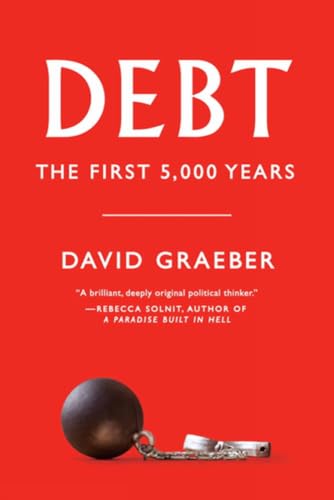
- BookDebt: The First 5,000 Years · Bookshop.org
Debt by David Graeber argues that debt preceded money and traces how debt and debt forgiveness have shaped political debates, laws, and religions for 5,000 years.


Book links are Bookshop.org affiliate links. Curiate may earn a commission on purchases, at no extra cost to you — Bookshop.org also gives a share to independent bookshops.
Reading paths, built to arrive somewhere
Curiate turns what you are curious about into a short path — a quick lesson on an article, something to watch, and a book to go deep on. Free to browse.