Testing scalable business models before scaling
Scalable business models describe how a business creates, delivers, and captures value, and how it conducts itself, spends, and earns money to generate profit. How can you test whether a business idea is worth scaling? By the end, readers will understand how to assess business design, learn from customer behavior, and estimate a model's potential before committing more resources.
3 articles, 1 book
The reading path
- Readscalable business models · Wikipedia
Entrepreneurs and managers perceive and explain business models through a design logic: creating or changing organizational structures to pursue a new opportunity. Case studies and IBM survey data on business models in large companies show how CEOs and entrepreneurs use coherent stories to move between opportunities-and that businesses tend to fail when those stories are incoherent or misaligned. A chain of stores can let customers order online and pick up products at a local store, combining online and offline presence. These examples show why testing a business idea should examine how the whole model works: businesses can also remove intermediaries and sell directly to consumers away from a fixed retail location.
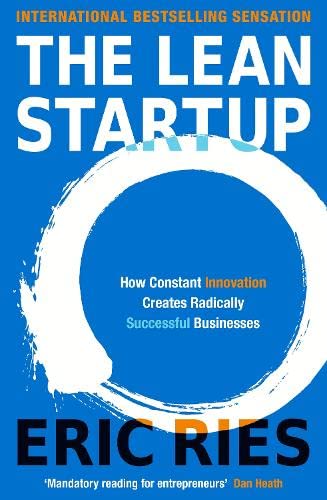
- BookThe Lean Startup · Bookshop.org
MVP is the smallest thing put in front of real users to learn whether it can deliver any value. Landing pages, waitlists and demo videos can confirm interest before a full build, often at the cheapest possible cost; the strongest approach matches the test to the real behavior founders hope to see later, whether usage, commitment or payment. Each approach reduces the time and money required to learn something important.
- ReadCRV | Lean Startup Business Model: How to Validate Before Scaling · crv.com
Ash Maurya, a business modeling expert, defines traction as the rate at which a business model captures monetizable value from its customers. He says monetizable value is a key measurable customer activity that serves as a leading indicator for future revenue, and recommends using a handful of key inputs to estimate a business model's potential: if the model cannot work on paper, it will be hard to make it work in the real world.
- ReadQ&A with Ash Maurya on Scaling Lean · InfoQ
It outlines the lean startup methodology, a framework for startup development that prioritizes rapid prototyping, validated learning, and iterative product releases. The goal of this methodology is to shorten product development cycles.



Book links are Bookshop.org affiliate links. Curiate may earn a commission on purchases, at no extra cost to you — Bookshop.org also gives a share to independent bookshops.
Reading paths, built to arrive somewhere
Curiate turns what you are curious about into a short path — a quick lesson on an article, something to watch, and a book to go deep on. Free to browse.