The Great Depression and financial failures
The history of the Great Depression concerns a severe global economic downturn from 1929 to 1939, marked by high unemployment and poverty, reduced industrial production and international trade, and widespread bank and business failures. How did financial failures deepen the Depression? Readers will understand how banking crises, monetary and trade pressures, and falling asset values compounded economic hardship.
3 articles, 1 book
The reading path
- Readthe history of the great depression · Wikipedia
In December 1930, a bank run on the Bank of United States ended with the bank unable to pay all its creditors and failing. Among 608 American banks that closed in November and December 1930, it accounted for a third of the total $550 million deposits lost, and its closure brought bank failures to a critical mass. Gold standard is a system in which currencies are tied to gold. The gold standard was the primary transmission mechanism of the Great Depression: higher interest rates in countries pursuing deflationary policy led to gold outflows from countries with lower interest rates, which had to reduce their money supply and domestic prices to maintain the standard. American exports declined from about $5.2 billion in 1929 to $1.7 billion in 1933, with farm commodities such as wheat, cotton, tobacco, and lumber hardest hit. The consensus view among economists and economic historians is that the Smoot-Hawley Tariff Act, passed on 17 June 1930, hampered trade and exacerbated the Great Depression, though they disagree on the precise extent of its influence.
- ReadThe Great Depression · federalreservehistory.org
From the fall of 1930 through the winter of 1933, the money supply fell by nearly 30 percent, and the Federal Reserve failed to stem the decline. The resulting deflation increased debt burdens, reduced consumption, increased unemployment, and forced banks, firms, and individuals into bankruptcy; the Fed's efforts to end deflation and revive the financial system appear to have been too little and too late.
- ReadWhat Caused the Great Depression: Stock Market | HISTORY · HISTORY
Investors increasingly bought stocks on margin, putting down as little as 10 percent and borrowing the rest against the stock. After the Dow Jones average declined nearly 13 percent on Black Monday, October 28, 1929, panic-driven sell-offs destroyed almost half its value in one month. Mary Eschelbach Hansen, a professor of economics at American University, said the crash reduced consumption as people's wealth fell and made consumers and firms pessimistic.
- BookThe Great Depression: A Diary · Bookshop.org
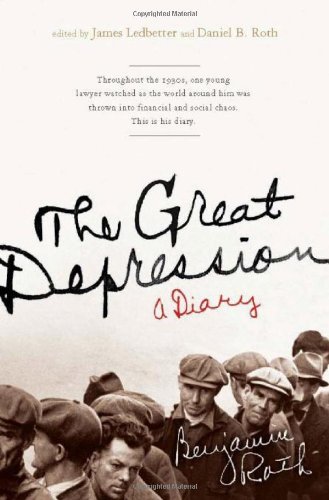
The Great Depression: A Diary by Benjamin Roth describes how a young lawyer in Youngstown, Ohio, saw prosperity give way to crisis after the 1929 stock market crash and formed theories about how a prudent person might survive hard times.


Book links are Bookshop.org affiliate links. Curiate may earn a commission on purchases, at no extra cost to you — Bookshop.org also gives a share to independent bookshops.
Reading paths, built to arrive somewhere
Curiate turns what you are curious about into a short path — a quick lesson on an article, something to watch, and a book to go deep on. Free to browse.