The Ottoman Empire from principality to empire
The rise and fall of the Ottoman Empire is described as the "Proto-Imperial Era," when, by the middle of the fifteenth century, Sultan Mehmed II established a centralized imperial state. How did a frontier principality become an empire? By the end, readers will understand how historical interpretations, population changes, and political developments shaped Ottoman expansion and state formation.
2 articles, 1 book
The reading path
- Readthe rise and fall of the ottoman empire · Wikipedia
Osman (r. 1299-1326), bey (chieftain) of Bithynia, expanded his domains at the bordering Byzantine realm's expense. After the Ottoman Interregnum (1402-1413), Mehmed I emerged as the unrivaled ruler of the unified Ottoman realm, and the Ottomans appeared before Constantinople in 1453 under Mehmed II.
- ReadOttoman Empire · World History Encyclopedia
Austrian historian Paul Wittek argued in 1938 that the early Ottoman state was built on Islamic holy war, but later historians criticized this view. Early Ottomans often used gaza and gazi in a secular sense for raids, and several companions of the first Ottoman rulers were non-Muslims or recent converts; only later did Ottoman writers portray the early Ottomans as zealous Islamic warriors. After 1347, the Black Death devastated urban centers and settled regions in Anatolia and the Balkans, while nomadic groups suffered less. The plague's depopulation was almost certainly a major factor in the success of early Ottoman expansion into the Balkans, whose first incursions began shortly thereafter, and contributed to the weakening of the Byzantine Empire.
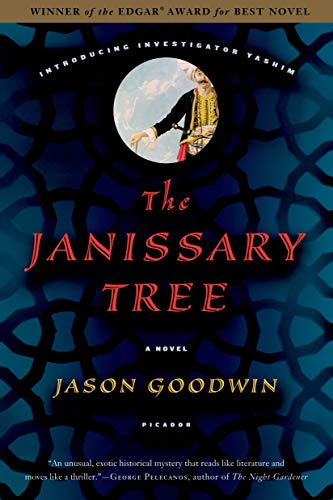
- BookThe Janissary Tree · Bookshop.org
The Janissary Tree by Jason Goodwin describes four officers disappearing from the Westernized corps that replaced the Janissaries before a military exercise, and Yashim the eunuch being entrusted with solving the case. This gives a concrete view of a military institution after the Janissaries and a mystery centered on its officers.


Book links are Bookshop.org affiliate links. Curiate may earn a commission on purchases, at no extra cost to you — Bookshop.org also gives a share to independent bookshops.
Reading paths, built to arrive somewhere
Curiate turns what you are curious about into a short path — a quick lesson on an article, something to watch, and a book to go deep on. Free to browse.