Trade routes and the influence of the silk road
The Silk Road was a network of Asian trade routes active from the second century BCE until the mid-15th century, spanning over 6,400 km (4,000 mi) on land and facilitating economic, cultural, political, and religious interactions between the Eastern and Western worlds.
2 articles, 1 video, 1 book · about 1 hr 24 min of reading and viewing
The reading path
- Readthe influence of the silk road · Wikipedia · 59 min read
The Silk Road's trade networks transmitted religions and culture across Eurasia. Established Buddhist monasteries along the Silk Road offered foreigners a haven as well as a new religion. The Maritime Silk Road let traders span the entire distance of the maritime routes, instead of relying on regional relays as with the overland route. Ships could carry far larger amounts of goods, creating greater economic impact with each exchange. Around 130 BCE, embassies of the Han dynasty went to Central Asia following reports by ambassador Zhang Qian, originally sent to obtain an alliance with the Yuezhi against the Xiongnu. Zhang Qian's report suggested the economic reason for Chinese expansion and wall-building westward, and trail-blazed the Silk Road.
- Read"The Silk Road: Connecting People and Cultures" · festival.si.edu · 20 min read
Silk moved across the planet with remarkable ease and became a vehicle for cultural creativity wherever it went. Cultures borrowed and chose techniques and patterns, and invented and discovered uses and styles.
- WatchThe Silk Road: Connecting the ancient world through trade - Shannon Harris Castelo · YouTube · 5 min watch
Shannon Harris Castelo unfolds the history of the 5,000-mile Silk Road, a network of multiple routes that used the common language of commerce to connect the world's major settlements, thread by thread.
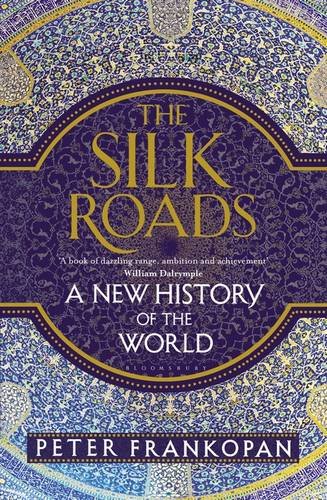
- BookThe Silk Roads: A New History of the World · Bookshop.org
The Silk Roads by Peter Frankopan describes how networks across Asia linked distant regions and argues that the fate of the West has long been inextricably linked to the East, from the first cities in Mesopotamia to the fall of Communism.


Book links are Bookshop.org affiliate links. Curiate may earn a commission on purchases, at no extra cost to you — Bookshop.org also gives a share to independent bookshops.
Reading paths, built to arrive somewhere
Curiate turns what you are curious about into a short path — a quick lesson on an article, something to watch, and a book to go deep on. Free to browse.