Why deontology puts rules before consequences
Deontology judges an action by whether it is right under rules and principles, rather than by its consequences, and C. D. Broad used "deontological" in its current specialised sense in his 1930 book, Five Types of Ethical Theory. How can rules outweigh consequences when duties conflict? The lessons consider how moral norms guide choices when outcomes point in another direction.
2 articles, 1 book · about 1 hr 10 min of reading and viewing
The reading path
- Read"Deontological Ethics" · plato.stanford.edu · 55 min read
For such deontologists, the Right is said to have priority over the Good: if an act is not in accord with the Right, it may not be undertaken, no matter the Good it might produce. Familiar forms of deontology hold that some choices remain morally forbidden, no matter how morally good their consequences. For such deontologists, a choice is right when it conforms to a moral norm, which agents are to obey rather than maximize.
- Readdeontology · Wikipedia · 15 min read
The Bhagavad Gita's Nishkama Karma teaches selfless action without attachment to results, with Dharma performed for the action's inherent rightness. Scholars of comparative philosophy have noted deontological parallels with Kantian "duty for duty's sake," but the Gita's framework is integrated with a cosmic and spiritual order aimed at liberation, unlike Kantian deontology's grounding in human autonomy and pure rational law.
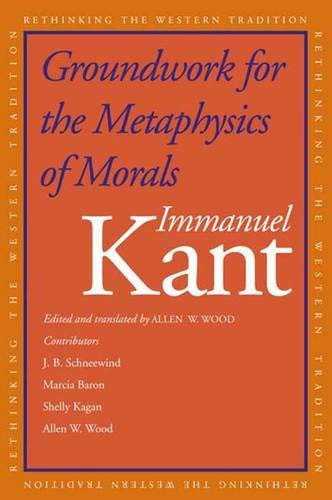
- BookGroundwork for the Metaphysics of Morals · Bookshop.org
Groundwork for the Metaphysics of Morals by Immanuel Kant introduces Kant's deontological ethics through an argument for the importance of duty and moral law.
Book links are Bookshop.org affiliate links. Curiate may earn a commission on purchases, at no extra cost to you — Bookshop.org also gives a share to independent bookshops.
Reading paths, built to arrive somewhere
Curiate turns what you are curious about into a short path — a quick lesson on an article, something to watch, and a book to go deep on. Free to browse.