Why psychology of perception misses what's there
Psychology of perception concerns how sensory information is identified, interpreted, and organized to represent and understand information or the environment. The lessons answer why perception can miss what is there, and help readers understand how sensory signals and prior experience shape what they perceive. They follow how interpretation works when sensory information is incomplete or ambiguous.
2 articles, 1 video, 1 book · about 2 hr 9 min of reading and viewing
The reading path
- Readpsychology of perception · Wikipedia · 45 min read
In psychology of perception, subjects briefly saw non-words such as "sael." Those told to expect animal-related words read it as "seal," while others expecting boat-related words read it as "sail," an example of how expectations can shape perception. In speech perception, professor Richard M. Warren replaced one phoneme of a word with a cough-like sound. His subjects perceptually restored the missing sound without difficulty and could not accurately identify which phoneme had been disturbed.
- ReadTo Be Energy-Efficient, Brains Predict Their Perceptions | Quanta Magazine · Quanta Magazine · 11 min read
Many neuroscientists are pivoting to a view of the brain as a "prediction machine." The evidence is mainly circumstantial and open to alternative explanations, and the more ambiguous the input, the greater the reliance on prior knowledge.
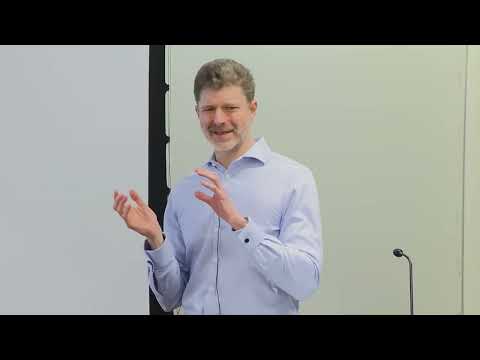
- Watch21: Attention (cont'd) · YouTube · 1 hr 13 min watch
Attention's mechanisms fall short of a faithful representation of the world. Texture segregation and attentional selection in time are among the topics the lecture covers.
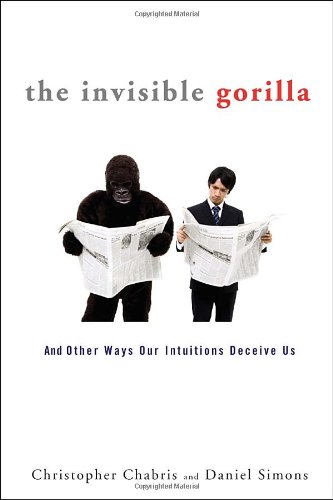
- BookThe Invisible Gorilla: How Our Intuitions Deceive Us · Bookshop.org
The Invisible Gorilla by Christopher Chabris and Daniel Simons is a non-fiction book about their Invisible Gorilla experiment; Chabris and Simons were awarded an Ig Nobel Prize for it.


Book links are Bookshop.org affiliate links. Curiate may earn a commission on purchases, at no extra cost to you — Bookshop.org also gives a share to independent bookshops.
Reading paths, built to arrive somewhere
Curiate turns what you are curious about into a short path — a quick lesson on an article, something to watch, and a book to go deep on. Free to browse.