How attention shapes thought in cognitive psychology
Cognitive psychology is the scientific study of human mental processes, including attention, memory, perception, and reasoning. These lessons answer how attention shapes what we think and help readers understand its role in mental processes. They connect attention with perception, awareness, and the ways people guide their own thinking.
2 articles, 1 video, 1 book · about 34 min of reading and viewing
The reading path
- ReadAttention and Awareness Uncoupled - Neuroscience News · Neuroscience News · 3 min read
Neuroscience experiments found that paying attention to the target almost doubled BOLD activity in the visual cortex, while sheer visibility of the target had almost no effect. Masataka Watanabe, the scientist summarizing the results, said, "Here the BOLD signal is not modulated by awareness."
- Readcognitive psychology · Wikipedia · 25 min read
A study at the Center for Ecological Study of Perception and Action at the University of Connecticut examines how people perceive their physical environment and how that shapes their navigation through it.
- WatchCan you trust your memory? This neuroscientist isn't so sure | André Fenton · YouTube · 6 min watch
Neuroscientist André Fenton explains how three kinds of memory work together to shape reality, and how memories can change with experience and mindset.
- BookThinking, Fast and Slow · Bookshop.org
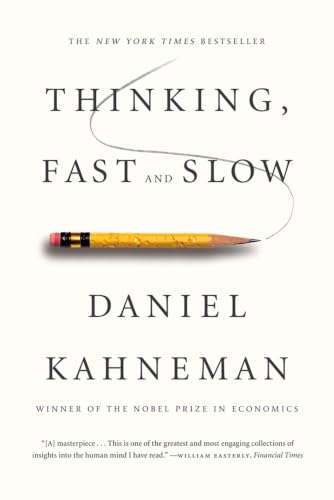
Thinking, Fast and Slow by Daniel Kahneman focuses on two modes of thought: fast, instinctive and emotional System 1, and slower, more deliberative and logical System 2. In the author's "Two systems" section, Kahneman discusses how these modes relate to human reasoning and decision-making.


Book links are Bookshop.org affiliate links. Curiate may earn a commission on purchases, at no extra cost to you — Bookshop.org also gives a share to independent bookshops.
Reading paths, built to arrive somewhere
Curiate turns what you are curious about into a short path — a quick lesson on an article, something to watch, and a book to go deep on. Free to browse.