How attention and memory shape thought in cognitive science
Cognitive science is the interdisciplinary scientific study of the mind and its processes, drawing on fields such as psychology, philosophy, artificial intelligence, neuroscience, linguistics, and anthropology. These lessons help readers understand how attention and memory shape thought. They trace how these processes relate to perception, language, and the ways information is represented.
3 articles, 1 book · about 47 min of reading and viewing
The reading path
- Readcognitive science · Wikipedia · 38 min read
In cognitive science, the dichotic listening task presents subjects with two different messages, one in each ear, and asks them to focus on only one. When asked about the unattended message afterward, subjects were unable to report its content. Memory, a topic in cognitive science, is often thought of as consisting of both a long-term and short-term store. Long-term memory stores information over days, weeks, or years, while short-term memory stores it for seconds or minutes. In cognitive science, eye fixation is linked to an individual's attentional focus. Monitoring eye movements can therefore show what information is being processed at a given time.
- ReadHow the Brain Distinguishes Memories From Perceptions | Quanta Magazine · Quanta Magazine · 6 min read
Cognitive science research on visual memory found major differences between how participants represented images during perception and recall. As participants recalled images, receptive fields, the areas of the visual field represented by neurons, stayed as large as the highest-level fields at every level, suggesting that only the highest-level representation was stored.
- ReadAttention and Awareness Uncoupled - Neuroscience News · Neuroscience News · 3 min read
BOLD signal measures brain activity based on blood oxygen levels. The primary visual cortex, the entrance stage to cortical visual processing, is a brain area where paying attention to the target almost doubled BOLD activity, while visibility had almost no effect; "Here the BOLD signal is not modulated by awareness."
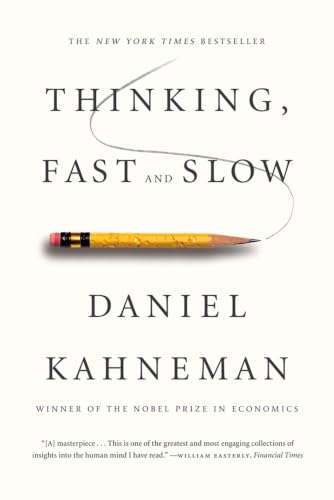
- BookThinking, Fast and Slow · Bookshop.org
Thinking, Fast and Slow by Daniel Kahneman describes System 1 as fast, intuitive, and emotional, and System 2 as slower, more deliberative, and more logical.


Book links are Bookshop.org affiliate links. Curiate may earn a commission on purchases, at no extra cost to you — Bookshop.org also gives a share to independent bookshops.
Reading paths, built to arrive somewhere
Curiate turns what you are curious about into a short path — a quick lesson on an article, something to watch, and a book to go deep on. Free to browse.