How science history changes through revolutions
Science history covers how science has developed from ancient times to the present across its natural, social, and formal branches. What makes scientific change revolutionary, and how do shifts in ideas and evidence reshape scientific understanding? The lessons trace how science changes through revolutions, from breaks with established ways of thinking to new frameworks for understanding.
2 articles, 1 video, 1 book · about 2 hr 39 min of reading and viewing
The reading path
- Readscience history · Wikipedia · 60+ min read
In science history, Hungarian physician Ignác Fülöp Semmelweis reduced puerperal fever in 1847 by requiring physicians to wash their hands before attending women in childbirth. His discovery predated the germ theory of disease. In geology, Alfred Wegener's theory of "continental drift" was widely dismissed when he proposed it in the 1910s, but new data gathered in the 1950s and 1960s led to plate tectonics, which provided a plausible mechanism for it. Plate tectonics also unified explanations for a wide range of seemingly unrelated geological phenomena.
- ReadThomas Kuhn (Stanford Encyclopedia of Philosophy/Spring 2005 Edition) · plato.stanford.edu · 45 min read
Thomas Kuhn argued that science can change through revolutions when a crisis leads an existing paradigm to be superseded by a rival. A paradigm supplies puzzles for scientists to solve and the tools for their solution. Thomas Kuhn's The Structure of Scientific Revolutions presents a picture of scientific development unlike any that had gone before. Kuhn says science develops through alternating 'normal' and 'revolutionary' phases, rather than uniformly; before Kuhn, there was little by way of a carefully considered, theoretically explained account of scientific change.
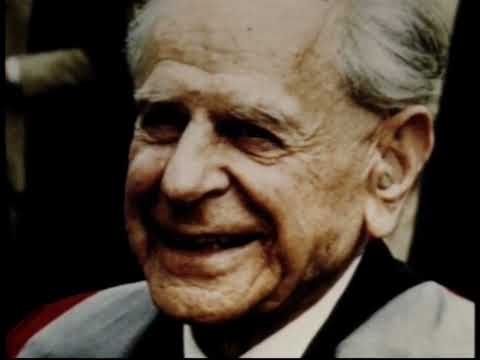
- WatchKarl Popper on Scientific Knowledge · YouTube · 7 min watch
Karl Popper's conception of science is anti-inductivist: it rejects induction as the foundation of scientific knowledge.
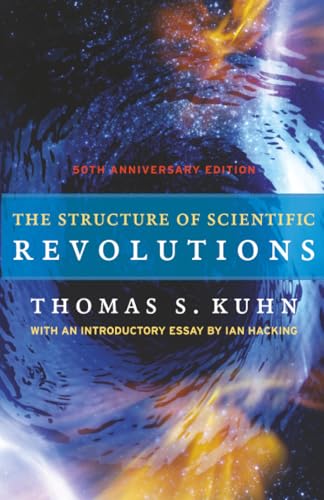
- BookThe Structure of Scientific Revolutions · Bookshop.org
The Structure of Scientific Revolutions by Thomas S. Kuhn argues that scientific progress is not simply the accumulation of accepted facts and theories: periods of normal science are interrupted by revolutions, as accumulating anomalies lead to new paradigms.
Book links are Bookshop.org affiliate links. Curiate may earn a commission on purchases, at no extra cost to you — Bookshop.org also gives a share to independent bookshops.
Reading paths, built to arrive somewhere
Curiate turns what you are curious about into a short path — a quick lesson on an article, something to watch, and a book to go deep on. Free to browse.