Why Sega and Nintendo's rivalry shaped console wars
The history of the gaming console wars is the competition between two or more video game console manufacturers. The term became popular to describe competition between Sega and Nintendo during the late 1980s and early 1990s, as Sega attempted to break into the United States video game market with its Sega Genesis console.
2 articles, 1 book · about 42 min of reading and viewing
The reading path
- Readthe history of the gaming console wars · Wikipedia · 37 min read
In the history of the gaming console wars, Sega president Hayao Nakayama wanted an iconic mascot to challenge Nintendo's Mario. Company artist Naoto Ohshima conceived Sonic the Hedgehog, and Yuji Naka helped develop a game showcasing the character and the Genesis's graphics and processing speed; it launched in North America in June 1991. Mortal Kombat became part of the gaming console wars when Nintendo and Sega recognized the need to have it on their consoles by 1993. Nintendo licensed a "clean" version from Acclaim for the SNES, replacing blood splatter with sweat and removing fatalities. Nintendo's U.S. console strategy in the gaming console wars gave the Famicom a VCR-like appearance and the name "Nintendo Entertainment System" to distance it from video game consoles. Nintendo also added a 10NES lockout system to prevent unauthorized games and retain publishing control.
- Read"How a Retro Rivalry Ignited the Most Heated Feud in Video Games" · inverse.com · 5 min read
Nintendo and Sega's heated rivalry sparked the "console wars." The Nintendo Entertainment System (NES), released in 1985, was followed by the Sega Genesis in 1989 and the SNES in 1990. Video game magazines leveraged the Nintendo-Sega divide in the mid-to-late 1990s to sell subscriptions. Publishers branded the competition as an endless wrestling match, using terms like "battle," "war," and "16-bit explosion" that stuck with readers of magazines like Electronic Gaming Monthly and GamePro.
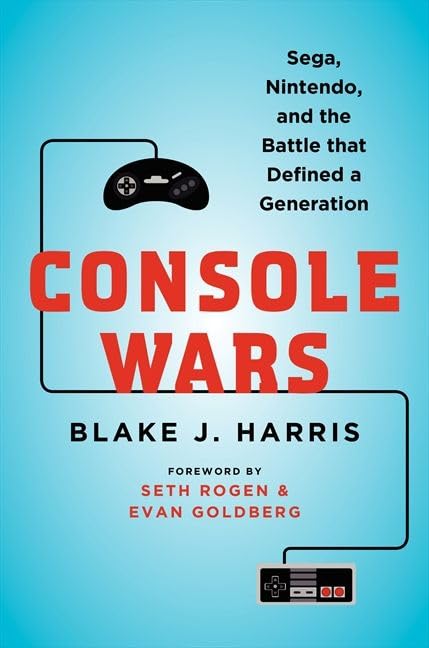
- BookConsole Wars: Sega, Nintendo, and the Battle that Defined a Generation · Bookshop.org
Console Wars by Blake J. Harris describes how Nintendo's position as king of home videogame entertainment systems was challenged when Sega entered as a contender for the crown.

Book links are Bookshop.org affiliate links. Curiate may earn a commission on purchases, at no extra cost to you — Bookshop.org also gives a share to independent bookshops.
Reading paths, built to arrive somewhere
Curiate turns what you are curious about into a short path — a quick lesson on an article, something to watch, and a book to go deep on. Free to browse.