A Multivitamin Slowed Two Aging Clocks—What Does That Mean?
In a two-year trial, a daily multivitamin was linked to slower aging on two of five DNA-based clocks. What did the trial measure, what had earlier multivitamin research found, and what does this result leave unanswered?
5 articles, 1 book
The reading path
- ReadTaking a Daily Multivitamin Might Slow Some Signs of Biological Aging, a New Study Suggests · Smithsonian Magazine
An epigenetic clock estimates biological aging by examining specific sites in DNA that gain or lose chemical tags as people grow older. These tags, called DNA methylation, can affect which genes are used to make proteins. The clocks help researchers track how quickly cells and tissues age and estimate risk of death. Biological age—the pace of aging at a cellular level—can differ from a person's age in years.
- ReadDo multivitamins make you healthier? - Harvard Health · Harvard Health
Before researchers tested multivitamins against epigenetic clocks, results on health outcomes were mixed. In the Physicians' Health Study II, a trial in which more than 14,000 male physicians took a multivitamin or a placebo—a pill with no active supplement—for over a decade, researchers found modest reductions in cancer and cataracts. They found no protection against cardiovascular disease, meaning conditions affecting the heart and blood vessels, or declining mental function. Separate research from COSMOS, the trial described next, reported possible slowing of memory loss.
- ReadScientists say a daily multivitamin may help slow aging · ScienceDaily
The new analysis used blood samples from 958 healthy participants in the COcoa Supplement and Multivitamin Outcomes Study (COSMOS), a clinical trial of older adults; their average age in years was 70. Participants were assigned to one of four daily pill combinations: cocoa extract and multivitamin, cocoa extract and placebo, multivitamin and placebo, or two placebos. Researchers compared five epigenetic clocks at the trial's start and after one and two years.
- ReadDaily multivitamins may slow biological aging, study finds · Nutrition Insight
Compared with the placebo group, participants taking a multivitamin had slowing on two of the five clocks, called PCGrimAge and PCPhenoAge, that was statistically significant: large enough to be unlikely to be chance. The other three—Horvath, Hannum, and DunedinPACE—showed no significant effect. The difference on the two clocks was estimated at about 2.7 to 5.1 months over two years, often summarized as roughly four months. Cocoa extract showed no significant effect on the clocks.
- ReadCOSMOS Trial Results Show Daily Multivitamin Use May Slow Biological Aging | Mass General Brigham · news.massgeneralbrigham.org
A change in an epigenetic clock does not establish that people became healthier or lived longer. Researchers said they do not yet know how to translate the measured change into clinical meaning. The study did not establish benefits for cancer prevention, heart health, or overall mortality. Researchers said follow-up work is needed to test whether the changes persist after the trial and whether improvements in biological aging relate to clinical outcomes.
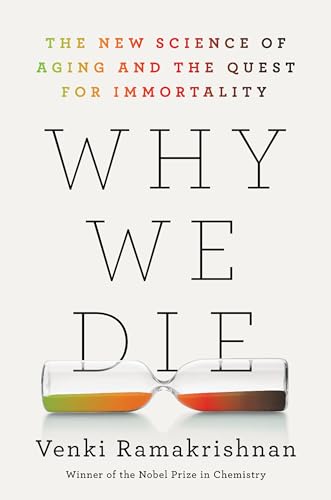
- BookWhy We Die: The New Science of Aging and the Quest for Immortality · Bookshop.org
Venki Ramakrishnan, a Nobel Prize winner in chemistry, examines aging and dying.




Book links are Bookshop.org affiliate links. Curiate may earn a commission on purchases, at no extra cost to you — Bookshop.org also gives a share to independent bookshops.
Reading paths, built to arrive somewhere
Curiate turns what you are curious about into a short path — a quick lesson on an article, something to watch, and a book to go deep on. Free to browse.