AI ethics and harms from algorithmic bias
The ethics of artificial intelligence concerns topics within AI with particular ethical stakes, including machine ethics, AI safety and alignment, and existential risks. These lessons help readers understand how algorithmic bias causes harm and why its effects can be difficult to detect. They consider how bias can arise in data, system design, and use, and how it can shape outcomes over time.
2 articles, 1 book
The reading path
- Readthe ethics of artificial intelligence · Wikipedia
Amazon terminated its use of AI hiring and recruitment because its system, trained on 10 years of data that included mostly male candidates, favored male candidates over female ones. The system learned this historical pattern and made biased recruitment decisions against female and minority candidates. In healthcare, complex AI methods often produce "black-box" models whose decisions are hard to interpret because it is challenging to trace how input data becomes output. This opacity can undermine trust and ethical considerations, and makes medical errors much harder to detect.
- BookWeapons of Math Destruction · Bookshop.org
AI-based tools for assessing skin cancer result in poorer outcomes for populations with diverse skin tones. Biases are often latent, meaning they may not be apparent before long-term use, which can make their effects harder to detect.
- ReadBiases in AI: acknowledging and addressing the inevitable ethical issues - PMC · pmc.ncbi.nlm.nih.gov
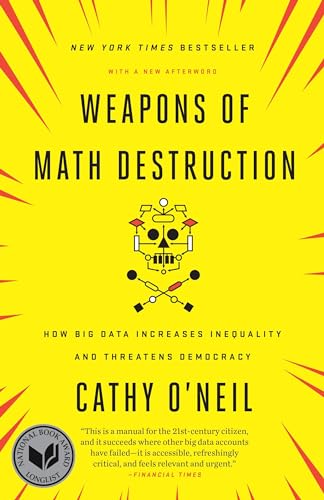
Weapons of Math Destruction by Cathy O'Neil explores how some big data algorithms reinforce preexisting inequality, and argues that these tools are opaque, unregulated, difficult to contest, and scalable, amplifying inherent biases across larger populations.
Book links are Bookshop.org affiliate links. Curiate may earn a commission on purchases, at no extra cost to you — Bookshop.org also gives a share to independent bookshops.
Reading paths, built to arrive somewhere
Curiate turns what you are curious about into a short path — a quick lesson on an article, something to watch, and a book to go deep on. Free to browse.