World War II and fascism's drive to war
The history of World War II concerns a global conflict between the Allies and the Axis powers from 1 September 1939 to 2 September 1945. How did fascist ambitions and policies drive the war? Readers will understand how authoritarian goals, aggression, and the weakening of democratic opposition shaped the path to conflict.
2 articles, 1 book
The reading path
- Readthe history of world war ii · Wikipedia
The Nazi regime promised to reverse the humiliation suffered at the Versailles peace conference in 1919 and establish a powerful new German Empire as the dominant force on the Continent. Although neither the Nazi nor the Communist parties in the German Weimar Republic ever won a majority in a contested election, by 1932, most German voters opted for one or the other, and essentially voted against liberal democracy.
- BookThe Second World War · Bookshop.org
Hitler's invasion aimed to destroy the Soviet Union as a military power, exterminate communism, seize "living space" by dispossessing its native population, and secure resources. Nazi policy made that conquest murderous: 2.8 million Soviet POWs had died in German captivity by the end of the winter of 1941. Despite vast territorial gains, the campaign failed to break Soviet resistance. Italy's invasion of Ethiopia began in October 1935 and ended in May 1936 with military occupation and annexation. The League of Nations did little when Italy violated Article X, and sanctions supported by the United Kingdom and France failed to end the invasion; Italy subsequently dropped its objections to Germany's goal of absorbing Austria.
- Read9: World War II - 1939-1945 · Humanities LibreTexts
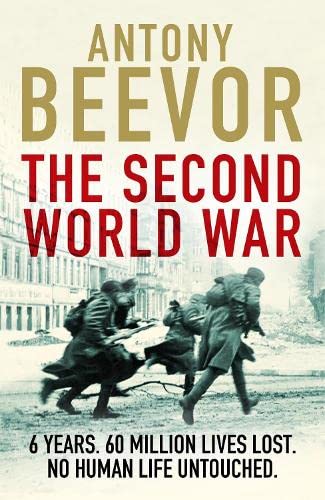
The Second World War by Antony Beevor provides a single-volume, intimate and broad account of the Second World War, offering a way to understand the scale of this major event in the history of world war ii.


Book links are Bookshop.org affiliate links. Curiate may earn a commission on purchases, at no extra cost to you — Bookshop.org also gives a share to independent bookshops.
Reading paths, built to arrive somewhere
Curiate turns what you are curious about into a short path — a quick lesson on an article, something to watch, and a book to go deep on. Free to browse.