The Cold War and its competing systems
The history of the Cold War is the history of international geopolitical rivalry between the United States and the Soviet Union and their respective allies, the capitalist Western Bloc and communist Eastern Bloc. How did competing systems, international influence, and changing policies shape this rivalry? By the end, readers will understand how ideological differences and political choices shaped Cold War relations over time.
2 articles, 1 book
The reading path
- Readthe history of the cold war · Wikipedia
In 1953, President Eisenhower implemented Operation Ajax, a covert coup operation to overthrow Iran's popularly elected prime minister, Mohammad Mosaddegh, after he nationalized the British-owned Anglo-Iranian Oil Company in 1951. The coup was part of the United States' competition for influence by proxy in the Third World during the Cold War. Perestroika, announced in June 1987 by Mikhail Gorbachev, the Soviet General Secretary, relaxed production quotas, allowed cooperative ownership of small businesses and paved the way for foreign investment. The measures were intended to redirect resources from costly Cold War military commitments to civilian production; glasnost increased press freedom and contact between Soviet citizens and the Western world, contributing to accelerating détente with the United States. The Berlin Blockade (June 1948, May 1949) prevented Western supplies from reaching West Berlin, but the Berlin airlift supplied the city despite Soviet threats. Berliners urged the airlift to continue, and US Air Force pilot Gail Halvorsen created "Operation Vittles," supplying candy to German children; the airlift firmly linked West Berlin to the United States.
- BookThe Cold War: A New History · Bookshop.org
The Bolshevik Revolution brought a communist government to Russia in November 1917, while the United States had a democratic government and capitalist economy. The Soviet government directed economic production and, in theory, shared goods and accumulated wealth relatively equally; in the United States, markets determined production and distribution, and property and businesses were privately owned. These opposing systems helped set the stage for Cold War rivalry.
- ReadOrigins of the Cold War | Encyclopedia.com · encyclopedia.com
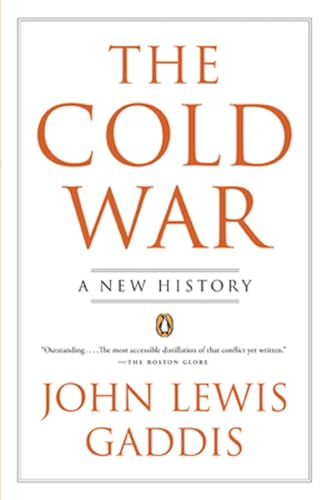
The Cold War by John Lewis Gaddis describes why key confrontations and political choices unfolded as they did, and how politics, ideology, social change, and morality interacted, helping readers understand the conflict through its events and underlying dynamics.

Book links are Bookshop.org affiliate links. Curiate may earn a commission on purchases, at no extra cost to you — Bookshop.org also gives a share to independent bookshops.
Reading paths, built to arrive somewhere
Curiate turns what you are curious about into a short path — a quick lesson on an article, something to watch, and a book to go deep on. Free to browse.