How Cold War rivalry shaped the space race
The Space Race was a 20th-century competition between the United States and the Soviet Union to achieve superior spaceflight capability. It began on July 29, 1955, when the United States announced its intent to launch artificial satellites for the International Geophysical Year.
2 articles, 1 video, 1 book · about 1 hr 40 min of reading and viewing
The reading path
- Readthe space race · Wikipedia · 60+ min read
In the space race, the Soviet Union tested the world's first successful intercontinental ballistic missile (ICBM), the R-7 Semyorka (also known as SS-6 by NATO), in October 1957. ICBMs could strike targets on the other side of the globe in a very short amount of time and were impervious to air interception such as bombers might have been. During the space race, President Eisenhower worried that a satellite passing above a nation at over 100 kilometers (62 mi) might be seen as violating its airspace. Eisenhower and his advisors believed a nation's airspace sovereignty did not extend past the Kármán line, and used the 1957 to 58 International Geophysical Year launches to establish this principle in international law. The space race reflected Cold War ideological contests between the United States and the Soviet Union. Historian Walter A. McDougall explains that space exploration demonstrated each superpower's political and technological system: the U.S. emphasized transparency and democratic values, while the USSR showcased its centralized, state-driven model.
- ReadWhat the Space Race Left Behind - JSTOR Daily · JSTOR Daily · 2 min read
Apollo's physical structures were viewed as disposable and were often modified for other uses as a result of the program proving unsustainable when political circumstances shifted.
- WatchWho won the space race? - Jeff Steers · YouTube · 5 min watch
Jeff Steers describes the history and benefits of the space race, from Sputnik's launch in 1957 to the United States and Soviet Union's shift toward collaboration.
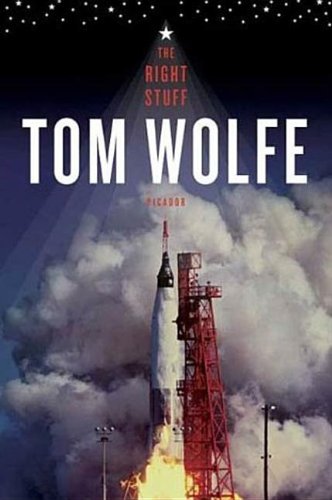
- BookThe Right Stuff · Bookshop.org
The Right Stuff, by Tom Wolfe, describes the space race through an early portion of the U.S. space program; Soviet efforts appear only as background. Wolfe also describes the first NASA astronauts and the test pilots whose stories preceded their selection.


Book links are Bookshop.org affiliate links. Curiate may earn a commission on purchases, at no extra cost to you — Bookshop.org also gives a share to independent bookshops.
Reading paths, built to arrive somewhere
Curiate turns what you are curious about into a short path — a quick lesson on an article, something to watch, and a book to go deep on. Free to browse.