How containment shaped the history of the cold war
The history of the Cold War is the period of geopolitical rivalry between the United States and the Soviet Union and their respective allies, beginning in the aftermath of the Second World War and ending with the Soviet Union's dissolution in 1991. It was called a cold war because the superpowers did not fight each other directly, though each supported opposing sides in regional proxy wars.
2 articles, 1 video, 1 book · about 2 hr 31 min of reading and viewing
The reading path
- Readthe history of the cold war · Wikipedia · 60+ min read
The Cuban Missile Crisis (October and November 1962) brought the world closer to nuclear war than ever before. The Soviet Union removed its missiles in return for a public American pledge not to invade Cuba again as well as a covert deal to remove US missiles from Turkey. The Cold War's Third World competition included the 1953 CIA coup Operation Ajax, which President Eisenhower implemented to overthrow Iranian prime minister Mohammad Mosaddegh. The pro-Western shah, Mohammad Reza Pahlavi, assumed control as an autocratic monarch. During the Berlin Blockade (June 1948 to May 1949), 300,000 Berliners demonstrated and urged the international airlift to continue, and US Air Force pilot Gail Halvorsen created "Operation Vittles" to supply candy to German children. The airlift was a logistical, political and psychological success for the West, and firmly linked West Berlin to the United States.
- ReadTwilight Struggle: The Cold War was Not Stable or Simple · War on the Rocks · 13 min read
Containment was a coherent basis for some far-reaching initiatives, from NATO to the Marshall Plan. Beyond that, it was the question rather than the answer.
- WatchUSA vs USSR Fight! The Cold War: Crash Course World History #39 · YouTube · 12 min watch
John Green teaches about the Cold War, from the division of Europe after World War II to the nuclear arms race, conflicts around the world, and the war's end.
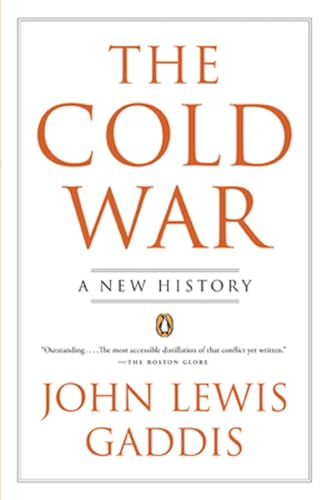
- BookThe Cold War: A New History · Bookshop.org
The Cold War by John Lewis Gaddis describes why key confrontations and political choices unfolded as they did, and how politics, ideology, social change, and morality interacted.


Book links are Bookshop.org affiliate links. Curiate may earn a commission on purchases, at no extra cost to you — Bookshop.org also gives a share to independent bookshops.
Reading paths, built to arrive somewhere
Curiate turns what you are curious about into a short path — a quick lesson on an article, something to watch, and a book to go deep on. Free to browse.