Ancient Greek philosophy and reasoned debate
Ancient Greek philosophy arose in the 6th century BC and dealt with a wide variety of subjects, including astronomy, epistemology, mathematics, political philosophy, ethics, metaphysics, ontology, logic, biology, rhetoric and aesthetics. How did philosophers use reason to explain the world and examine knowledge? By the end, readers will understand how debate over nature, knowledge, and order shaped Greek philosophical inquiry.
2 articles, 1 book
The reading path
- Readancient greek philosophy · Wikipedia
Thales gave a naturalistic explanation of the cosmos and supported it with reasons, which philosopher and historian of Greek philosophy John Burnet says made him the "first man of science." Anaximander reasoned that water and fire, opposites that can change into one another, could not be the underlying unity behind them. Protagoras, whom Plato presents as teaching that all virtue is conventional, claimed that "man is the measure of all things, of the things that are, that they are, and of the things that are not, that they are not"; Plato interprets this as radical perspectivism, where some things could actually be different for different people.
- BookSophie's World · Bookshop.org
The Ionian cosmologists used abstract reasoning rather than mythology, but they disagreed about what all things share. The Eleatic school also studied epistemology-how people come to know what exists-while Pythagoras sought the principles that give the world order: he argued that mathematical principles, or "number," give it harmony, rhythm, and beauty.
- ReadGreek philosophy, Ancient - New World Encyclopedia · newworldencyclopedia.org
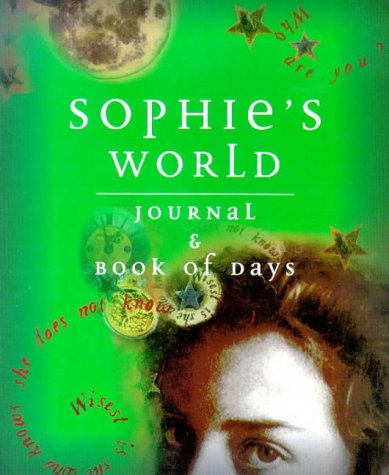
Sophie's World by Jostein Gaarder follows Sophie Amundsen, a Norwegian teenager introduced to the history of philosophy. The first volume of the graphic-novel adaptation is titled From Socrates to Galileo, locating its stated journey within that history.

Book links are Bookshop.org affiliate links. Curiate may earn a commission on purchases, at no extra cost to you — Bookshop.org also gives a share to independent bookshops.
Reading paths, built to arrive somewhere
Curiate turns what you are curious about into a short path — a quick lesson on an article, something to watch, and a book to go deep on. Free to browse.