Astrophysics, galaxies, and the universe
Astrophysics is the science that applies physics and chemistry to study astronomical objects and phenomena, including the universe. These lessons answer how physics explains galaxies and the universe, helping readers understand how physical processes shape them. They connect the study of galaxies with the broader themes of cosmology and astrophysics.
2 articles, 1 book
The reading path
- Readthe fundamentals of astrophysics · Wikipedia
By 1860, physicist Gustav Kirchhoff and chemist Robert Bunsen had demonstrated that dark lines in the solar spectrum corresponded to bright lines in spectra of known gases, with specific lines corresponding to unique chemical elements. Kirchhoff deduced that chemical elements in the Solar atmosphere caused the dark lines by absorbing light, and this proved that the chemical elements found in the Sun and stars were also found on Earth. Stars, galaxies, and nebulae can be studied through their chemical spectra, and ultraviolet, X-ray, and gamma ray astronomy studies very energetic processes. Astrophysics applies physics and chemistry to astronomical objects and phenomena, including the universe, while these kinds of radiation do not penetrate Earth's atmosphere well, so they are observed with space-based telescopes or ground-based imaging air Cherenkov telescopes. Analytical models generally give insight into what is happening inside a process, while numerical simulations can reveal otherwise unseen effects. Theoretical astrophysicists use both to predict observational consequences, which observers can test against data; when data conflict with a model, theorists generally try minimal modifications, though persistent inconsistency may lead them to abandon it.
- ReadGalaxy Formation and Evolution. · pages.astro.umd.edu
Dark matter is an unknown component of the Universe. Galaxies raise questions about their relation to dark matter and dark energy, what shapes their different properties, and what physics underlies correlations between those properties; understanding their formation and evolution requires connecting processes across physics and astrophysics, including star formation, the dispersal of elements, central black holes, and cosmic structure.
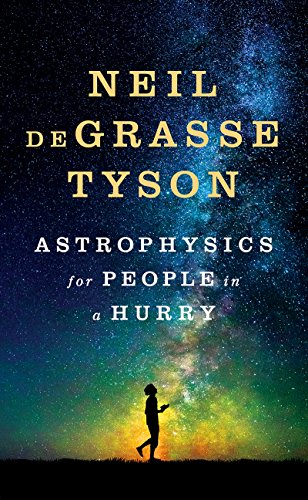
- BookAstrophysics for People in a Hurry · Bookshop.org
Astrophysics for People in a Hurry is a 2017 popular science book by Neil deGrasse Tyson, centering around a number of basic questions about the universe. Published on May 2, 2017, by W. W. Norton & Company, the book is a collection of Tyson's essays that appeared in Natural History magazine at various times from 1997 to 2007.

Book links are Bookshop.org affiliate links. Curiate may earn a commission on purchases, at no extra cost to you — Bookshop.org also gives a share to independent bookshops.
Reading paths, built to arrive somewhere
Curiate turns what you are curious about into a short path — a quick lesson on an article, something to watch, and a book to go deep on. Free to browse.