Astrophysics, starlight, and stellar lives
Astrophysics applies the methods and principles of physics and chemistry to the study of astronomical objects and phenomena, including the universe. How do astronomers use light and models to investigate cosmic objects and their histories? By the end, readers will understand how spectra reveal composition and temperature, how stars' mass and fusion shape their lives, and how simulations and observations test astrophysical ideas.
2 articles, 1 book
The reading path
- Readastrophysics · Wikipedia
Dark lines in the Sun's spectrum revealed that elements in the Sun and stars were also found on Earth. Physicist Gustav Kirchhoff deduced that chemical elements in the Solar atmosphere absorbed the light, and Norman Lockyer, who studied solar and stellar spectra, could not match a yellow line to any known element, so he claimed it represented a new element called helium. Objects colder than stars, such as planets, are normally studied at infrared frequencies, while stars are highly visible in optical light. Reading chemical spectra in that light lets astronomers study the chemical composition of stars, galaxies, and nebulae. Numerical simulations can reveal effects that analytical models, which generally give better insight into a process, may not show. Theoretical astrophysicists use both kinds of models to predict observational consequences, so observers can seek data that refute a model or distinguish alternatives; when data conflict, theorists generally make minimal changes, though persistent inconsistency may lead them to abandon it.
- BookContact · Bookshop.org
An O-type star has 100 times more hydrogen fuel than a star like the Sun, yet burns through it in a million years. The OBAFGM spectral sequence orders stars by temperature, and spectra help classify them; a star's mass determines its life, while its hydrogen supply and fusion rate set how long it remains a hydrogen-burning main sequence star.
- Read1.3: Spectroscopy and Stars · Physics LibreTexts
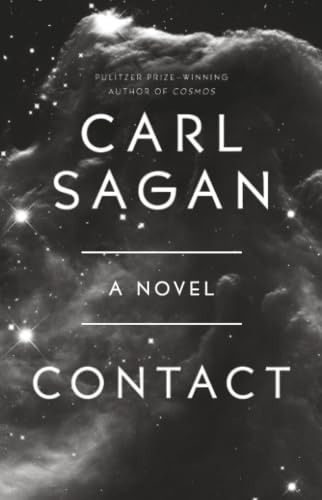
Contact is a 1985 hard science fiction novel by American scientist Carl Sagan. The plot concerns contact between humanity and a more technologically advanced extraterrestrial life form.


Book links are Bookshop.org affiliate links. Curiate may earn a commission on purchases, at no extra cost to you — Bookshop.org also gives a share to independent bookshops.
Reading paths, built to arrive somewhere
Curiate turns what you are curious about into a short path — a quick lesson on an article, something to watch, and a book to go deep on. Free to browse.