Cosmology and evidence for the universe's history
Cosmology is the study of the nature of the universe. How do observations help explain the universe's history? By the end, readers will understand how different ways of interpreting the universe relate to evidence and how evidence supports accounts of cosmic change.
3 articles, 1 book
The reading path
- Readcosmology · Wikipedia
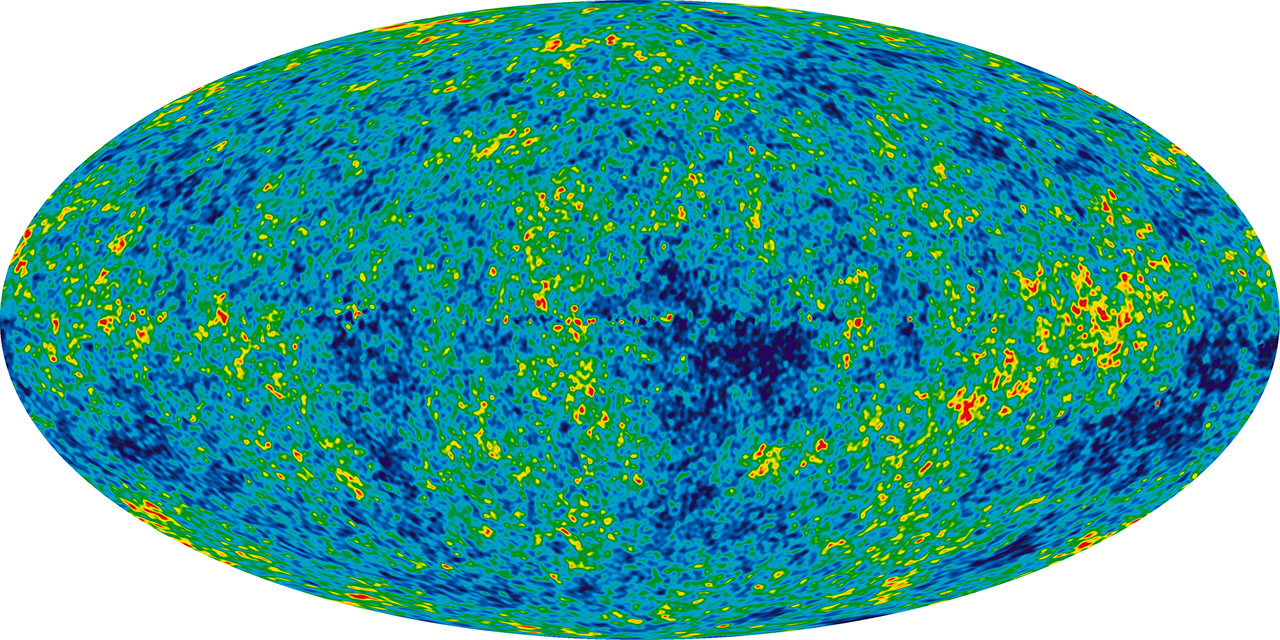
Cosmic microwave background is radiation left over from the early universe. WMAP measured small temperature variations in this radiation with much finer detail and greater sensitivity than COBE, comparing two points in the sky. These measurements reveal the universe's size, matter content, age, geometry and fate, and, along with other results, support "inflation", the idea that the universe underwent a dramatic period of expansion.
- BookCosmos · Bookshop.org
About one minute after the Big Bang, protons and neutrons were being synthesized into light nuclei, and about 370,000 years later, electrons combined with nuclei into atoms. As the universe expands, light waves stretch to longer wavelengths, so this radiation cooled to approximately 3 degrees Kelvin.
- ReadWMAP Overview - NASA Science · NASA Science
Religious cosmology draws on creation and eschatology traditions, while scientific cosmology is generally grounded in empirical evidence and observations. Their histories have intertwined, but recent scientific cosmology has challenged many aspects of religious cosmology-showing how observations can reshape accounts of the universe's history.
- ReadCosmology Primer: Overview · preposterousuniverse.com
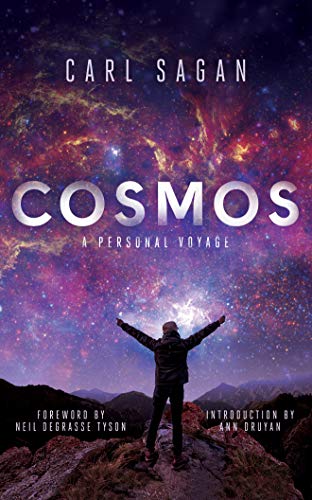
Cosmos by Carl Sagan describes fifteen billion years of cosmic evolution transforming matter into life and consciousness, enabling the Cosmos to wonder about itself.

Book links are Bookshop.org affiliate links. Curiate may earn a commission on purchases, at no extra cost to you — Bookshop.org also gives a share to independent bookshops.
Reading paths, built to arrive somewhere
Curiate turns what you are curious about into a short path — a quick lesson on an article, something to watch, and a book to go deep on. Free to browse.