Biostatistics, inheritance, and population inference
Biostatistics, sometimes referred to as biometry, is a branch of statistics that applies statistical methods to topics in the biological sciences, with a focus on clinical medicine and public health. How does statistics make biological evidence meaningful? By the end, readers will understand how statistical thinking connects biological patterns with population-level conclusions.
2 articles, 1 book
The reading path
- Readbiostatistics · Wikipedia
Gregor Mendel, a genetics researcher, investigated inheritance patterns in families of peas and used statistics to explain the collected data. By the 1930s, statistical models had helped resolve differences between genetics and evolutionary Darwinism, producing the neo-Darwinian modern evolutionary synthesis and bringing genetics and evolution together in population genetics. Ronald Fisher contributed to genetics and statistics, including ANOVA and Fisher's exact test. A biostatistical population can be all sperm cells in animals or the total leaf area of a plant, not just the individuals. Since measuring all elements is not possible, random sampling aims to represent the population and catch its variability, making inference possible.
- ReadStatistics study guide: biostatistics, sampling, experiments | Notes · pearson.com
Heights of 100 students from a school are a sample, a subset of the population, meaning all students in that school. Sampling is necessary when collecting data from the entire population is impractical or impossible, and inferential statistics use sample data to estimate a population value.
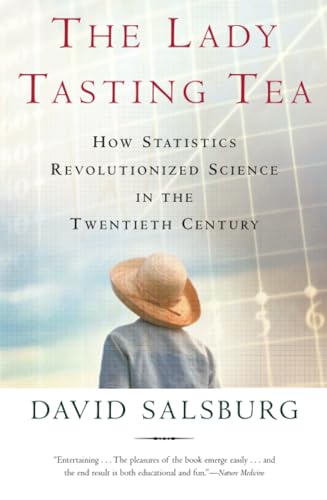
- BookThe Lady Tasting Tea: How Statistics Revolutionized Science in the Twentieth Century · Bookshop.org
The Lady Tasting Tea by David Salsburg discusses how statistics changed twentieth-century science through the theories and ideas of famous scientists and thinkers, giving readers a historical perspective on statistical thinking.

Book links are Bookshop.org affiliate links. Curiate may earn a commission on purchases, at no extra cost to you — Bookshop.org also gives a share to independent bookshops.
Reading paths, built to arrive somewhere
Curiate turns what you are curious about into a short path — a quick lesson on an article, something to watch, and a book to go deep on. Free to browse.