Cognitive dissonance and defending beliefs
Cognitive dissonance exists without outward sign, but surfaces through psychological stress when people participate in an action that creates conflicting beliefs, attitudes, or behaviors, or when new information challenges existing beliefs. How do people respond when their actions, commitments, or social ties conflict with evidence? By the end, readers will understand how self-justification, selective exposure, and group support can preserve beliefs or intensify dissonance.
3 articles, 1 book
The reading path
- Readcognitive dissonance · Wikipedia
In Cognitive Consequences of Forced Compliance (1959), investigators Leon Festinger and Merrill Carlsmith found that students paid one dollar rated tedious tasks more positively than students paid twenty dollars after being asked to tell another group the tasks were interesting. The researchers proposed that the one-dollar group had no other justification for saying this and were compelled to internalize the attitude. Loneliest residents in an elderly home preferred documentaries featuring an "unhappy, lonely elderly person" over those featuring a "very happy, successful elderly person." A 2015 study found that participants trusted attitude-consistent online news the most, regardless of source; the passage links such selective exposure to psychological discomfort and avoiding counter-attitudinal information. When the spaceship failed to arrive, members of the apocalyptic religious cult in When Prophecy Fails (1956) faced acute cognitive dissonance about whether they had been victims of a hoax. Most believed the aliens had given Earth a second chance, while some members of the Chabad Orthodox Jewish congregation continued claiming after their Rebbe, Menachem Mendel Schneerson, died of a stroke in 1994 that he was the Messiah and would soon return from the dead.
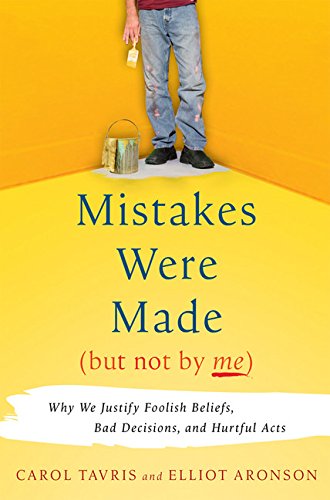
- BookMistakes Were Made (But Not by Me) · Bookshop.org
System justification theory predicts that disadvantaged people with weak personal and group interests will be especially likely to support the system that disadvantages them, resolving dissonance by embracing it. But the authors argue this conflicts with cognitive dissonance theory: a conflict requires an important belief to clash with reality, so disadvantaged people with strong interests should experience greater dissonance and stronger system justification.
- ReadThe System Justification Conundrum: Re-Examining the Cognitive Dissonance Basis for System Justification - PMC · pmc.ncbi.nlm.nih.gov
In When Prophecy Fails (1956), the Seekers had given up their homes and jobs for a leader's prediction that a great flood would destroy the Earth, with a flying saucer to rescue them. When the prophecy failed, the most devoted believers claimed their faith had saved the world and began energetically recruiting new believers; the converts' social support outweighed the disconfirming evidence. The case shows how costly commitment and group support can help people preserve a belief rather than abandon it.
- ReadCognitive Dissonance In Psychology: Definition and Examples · Simply Psychology
Mistakes Were Made (but Not by Me) by Carol Tavris and Elliot Aronson deals with cognitive dissonance and other cognitive biases, using these theories to illustrate how perpetrators and victims of hurtful acts justify and rationalize their behavior.


Book links are Bookshop.org affiliate links. Curiate may earn a commission on purchases, at no extra cost to you — Bookshop.org also gives a share to independent bookshops.
Reading paths, built to arrive somewhere
Curiate turns what you are curious about into a short path — a quick lesson on an article, something to watch, and a book to go deep on. Free to browse.