Color theory, mixing and perception
Color theory is a historical body of knowledge describing the behavior of colors in mixing, contrast, harmony, schemes, and symbolism. How do the limits of color mixing and the colors around an object shape what we see? By the end, readers will understand how color models and visual context influence perception and choices in visual communication.
2 articles, 1 book
The reading path
- Readcolor theory · Wikipedia
Josef Albers, a student of Itten's at the Bauhaus, used opaque pieces of colored paper to show how people tend to perceive a color based on the colors around it. In one example, viewers assume two small squares are colors from their opposite backgrounds, though the squares are actually the exact same color.
- ReadA short history of color theory - Programming Design Systems · programmingdesignsystems.com
Subtractive primary colors is a color-mixing concept in color theory: cyan, magenta and yellow as used in printing are more accurate subtractive primary colors than red, yellow and blue. Modern color science does not recognize universal primary colors; any three primaries define a color space and mix only a limited range of colors, called a gamut, smaller than the full range humans can perceive, shaping how color is perceived.
- BookColor: A Natural History of the Palette · Bookshop.org
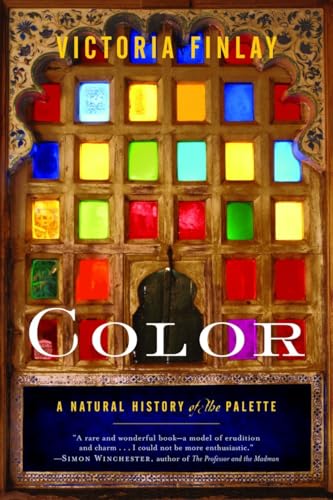
Color by Victoria Finlay reports that Michelangelo's "ultramarine" paint came from an Afghan mine and was so expensive he couldn't afford to buy it himself.

Book links are Bookshop.org affiliate links. Curiate may earn a commission on purchases, at no extra cost to you — Bookshop.org also gives a share to independent bookshops.
Reading paths, built to arrive somewhere
Curiate turns what you are curious about into a short path — a quick lesson on an article, something to watch, and a book to go deep on. Free to browse.