Corporate governance structures, incentives, and accountability
Corporate governance refers to the mechanisms, processes, practices, and relations by which corporations are controlled and operated by their boards of directors, managers, shareholders, and stakeholders. How do governance arrangements, executive incentives, sustainability concerns, and governance principles shape corporate decisions? By the end, readers will understand how governance can balance interests, guide long-term performance, and support accountability.
2 articles, 1 book
The reading path
- Readcorporate governance · Wikipedia
Some continental European countries, including Germany, Austria, and the Netherlands, require a two-tiered board to improve corporate governance. The executive board generally runs day-to-day operations, while the supervisory board oversees its members and reviews major decisions. Germany's co-determination practice, established under the German Codetermination Act of 1976, grants workers board seats separate from those allocated to shareholder equity. Treasury stock is stock a corporation has repurchased. Executives may have incentive to divert cash surpluses to buying treasury stock to support or increase the share price, reducing resources available to maintain or enhance profitable operations, and executives can sacrifice long-term profits for short-term personal gain. Investors increasingly consider the financial risks and opportunities that economic, environmental and societal challenges pose for companies, alongside financial performance. A sound governance framework can help companies respond to shareholders' and stakeholders' interests and support long-term success; it should disclose reliable, consistent and comparable material sustainability information, including climate-related information. In some jurisdictions, disclosure standards may focus on what a reasonable shareholder needs for investment or voting decisions.
- BookThe Corporation: The Pathological Pursuit of Profit and Power · Bookshop.org
The first relevant corporate governance principles were published by US scientists after the 1929 stock market crash, who observed a divergence between shareholder and management interests. Business executives embraced the principles with greater zeal starting in the 1970s, and the term became well-known internationally in the 1990s as corporations reported on practical implementation. The OECD principles, first published in 1999 and most recently updated in 2015, aim to support economic efficiency, sustainable growth and financial stability.
- ReadCorporate Governance: The Business Management Principles · ionos Digital Guide
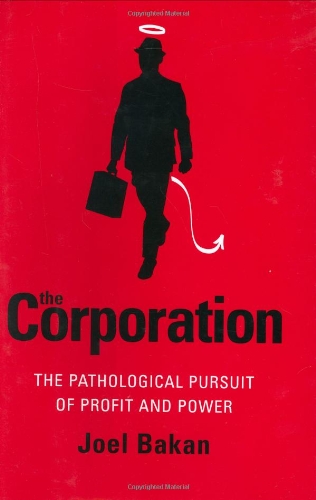
The Corporation by Joel Bakan examines and criticizes corporate business practices through vignettes and interviews, giving readers concrete examples to consider when thinking about corporate governance.

Book links are Bookshop.org affiliate links. Curiate may earn a commission on purchases, at no extra cost to you — Bookshop.org also gives a share to independent bookshops.
Reading paths, built to arrive somewhere
Curiate turns what you are curious about into a short path — a quick lesson on an article, something to watch, and a book to go deep on. Free to browse.