Dolly's cloning and the prospect of human copies
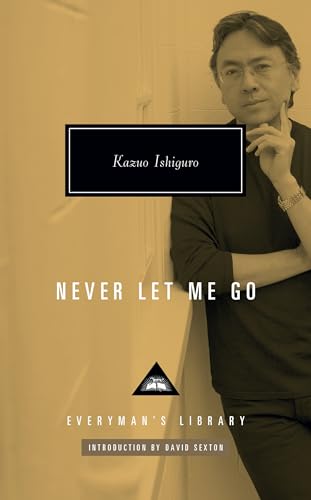
Dolly, a Finn-Dorset sheep, was cloned by Roslin Institute associates in Scotland using nuclear transfer from a mammary gland cell. How did Dolly's birth turn the prospect of cloning humans into a scientific and ethical debate? Bioethics is a field of inquiry centered around the uses and moral implications of medicine and the bio-sciences. Never Let Me Go by Kazuo Ishiguro is a science fiction novel that offers a fictional context for considering bioethics.
3 articles, 1 book
The reading path
- BookNever Let Me Go · Bookshop.org
Dolly, a Finn-Dorset sheep, was cloned by associates of the Roslin Institute in Scotland using nuclear transfer from a mammary gland cell. Her cloning proved that a cloned organism could be produced from a mature cell from a specific body part, a result that could inform bioethics debates about cloning humans.
- ReadDolly (sheep) · Wikipedia
Dolly's birth was a major scientific achievement, but its implications were quickly overshadowed by fears of human cloning. TIME asked, "Will There Ever Be Another You?" and Dolly's birth sparked scientific and ethical debates.
- ReadDolly the Sheep Cloning · History.com
The possibility that similar experiments might soon be performed using human embryos sparked the most spirited public debate. Most commentators seemed to agree that such efforts would be profoundly immoral, but Arthur L. Caplan, director of the University of Pennsylvania's bioethics center, told reporters, "Yes. It would not even take too much science" to do this on a human embryo.
- ReadWilmut Clones First Large Mammal from Adult Cell · EBSCO Research Starters
Never Let Me Go by Kazuo Ishiguro is a science fiction novel that offers a fictional context for considering bioethics.


Book links are Bookshop.org affiliate links. Curiate may earn a commission on purchases, at no extra cost to you — Bookshop.org also gives a share to independent bookshops.
Reading paths, built to arrive somewhere
Curiate turns what you are curious about into a short path — a quick lesson on an article, something to watch, and a book to go deep on. Free to browse.